INN DIN, Myanmar (Reuters) - Bound together, the 10 Rohingya Muslim captives watched their Buddhist neighbors dig a shallow grave. Soon afterwards, on the morning of Sept. 2, all 10 lay dead. At least two were hacked to death by Buddhist villagers. The rest were shot by Myanmar troops, two of the gravediggers said.
Ten Rohingya Muslim men with their hands bound kneel in Inn Din village September 1, 2017. Handout via REUTERS
"One grave for 10 people," said Soe Chay, 55, a retired soldier from Inn Din's Rakhine Buddhist community who said he helped dig the pit and saw the killings. The soldiers shot each man two or three times, he said. "When they were being buried, some were still making noises. Others were already dead."
The killings in the coastal village of Inn Din marked another bloody episode in the ethnic violence sweeping northern Rakhine state, on Myanmar's western fringe. Nearly 690,000 Rohingya Muslims have fled their villages and crossed the border into Bangladesh since August. None of Inn Din's 6,000 Rohingya remained in the village as of October.
The Rohingya accuse the army of arson, rapes and killings aimed at rubbing them out of existence in this mainly Buddhist nation of 53 million. The United Nations has said the army may have committed genocide; the United States has called the action ethnic cleansing. Myanmar says its "clearance operation" is a legitimate response to attacks by Rohingya insurgents.
Rohingya trace their presence in Rakhine back centuries. But most Burmese consider them to be unwanted immigrants from Bangladesh; the army refers to the Rohingya as "Bengalis." In recent years, sectarian tensions have risen and the government has confined more than 100,000 Rohingya in camps where they have limited access to food, medicine and education.
Reuters has pieced together what happened in Inn Din in the days leading up to the killing of the 10 Rohingya – eight men and two high school students in their late teens.
Until now, accounts of the violence against the Rohingya in Rakhine state have been provided only by its victims. The Reuters reconstruction draws for the first time on interviews with Buddhist villagers who confessed to torching Rohingya homes, burying bodies and killing Muslims.
This account also marks the first time soldiers and paramilitary police have been implicated by testimony from security personnel themselves. Members of the paramilitary police gave Reuters insider descriptions of the operation to drive out the Rohingya from Inn Din, confirming that the military played the lead role in the campaign.
PHOTOGRAPHS FROM A MASSACRE
The slain men's families, now sheltering in Bangladesh refugee camps, identified the victims through photographs shown to them by Reuters. The dead men were fishermen, shopkeepers, the two teenage students and an Islamic teacher.
Three photographs, provided to Reuters by a Buddhist village elder, capture key moments in the massacre at Inn Din, from the Rohingya men's detention by soldiers in the early evening of Sept. 1 to their execution shortly after 10 a.m. on Sept. 2. Two photos – one taken the first day, the other on the day of the killings – show the 10 captives lined up in a row, kneeling. The final photograph shows the men's bloodied bodies piled in the shallow grave.
The Reuters investigation of the Inn Din massacre was what prompted Myanmar police authorities to arrest two of the news agency's reporters. The reporters, Burmese citizens Wa Lone and Kyaw Soe Oo, were detained on Dec. 12 for allegedly obtaining confidential documents relating to Rakhine.
Then, on Jan. 10, the military issued a statement that confirmed portions of what Wa Lone, Kyaw Soe Oo and their colleagues were preparing to report, acknowledging that 10 Rohingya men were massacred in the village. It confirmed that Buddhist villagers attacked some of the men with swords and soldiers shot the others dead.
The statement coincided with an application to the court by prosecutors to charge Wa Lone and Kyaw Soe Oo under Myanmar's Official Secrets Act, which dates back to the time of colonial British rule. The charges carry a maximum 14-year prison sentence.
But the military's version of events is contradicted in important respects by accounts given to Reuters by Rakhine Buddhist and Rohingya Muslim witnesses. The military said the 10 men belonged to a group of 200 "terrorists" that attacked security forces. Soldiers decided to kill the men, the army said, because intense fighting in the area made it impossible to transfer them to police custody. The army said it would take action against those involved.
Buddhist villagers interviewed for this article reported no attack by a large number of insurgents on security forces in Inn Din. And Rohingya witnesses told Reuters that soldiers plucked the 10 from among hundreds of men, women and children who had sought safety on a nearby beach.
Scores of interviews with Rakhine Buddhist villagers, soldiers, paramilitary police, Rohingya Muslims and local administrators further revealed:
- The military and paramilitary police organized Buddhist residents of Inn Din and at least two other villages to torch Rohingya homes, more than a dozen Buddhist villagers said. Eleven Buddhist villagers said Buddhists committed acts of violence, including killings. The government and army have repeatedly blamed Rohingya insurgents for burning villages and homes.
- An order to "clear" Inn Din's Rohingya hamlets was passed down the command chain from the military, said three paramilitary police officers speaking on condition of anonymity and a fourth police officer at an intelligence unit in the regional capital Sittwe. Security forces wore civilian clothes to avoid detection during raids, one of the paramilitary police officers said.
- Some members of the paramilitary police looted Rohingya property, including cows and motorcycles, in order to sell it, according to village administrator Maung Thein Chay and one of the paramilitary police officers.
- Operations in Inn Din were led by the army's 33rd Light Infantry Division, supported by the paramilitary 8th Security Police Battalion, according to four police officers, all of them members of the battalion.
POTENTIAL CRIMINAL CASES
Michael G. Karnavas, a U.S. lawyer based in The Hague who has worked on cases at international criminal tribunals, said evidence that the military had organized Buddhist civilians to commit violence against Rohingya "would be the closest thing to a smoking gun in establishing not just intent, but even specific genocidal intent, since the attacks seem designed to destroy the Rohingya or at least a significant part of them."
Evidence of the execution of men in government custody also could be used to build a case of crimes against humanity against military commanders, Karnavas said, if it could be shown that it was part of a "widespread or systematic" campaign targeting the Rohingya population.
Kevin Jon Heller, a University of London law professor who served as a legal associate for convicted war criminal and former Bosnian Serb leader Radovan Karadzic, said an order to clear villages by military command was "unequivocally the crime against humanity of forcible transfer."
In December, the United States imposed sanctions on the army officer who had been in charge of Western Command troops in Rakhine, Major General Maung Maung Soe. So far, however, Myanmar has not faced international sanctions over the violence.
Myanmar's leader, Aung San Suu Kyi, has disappointed many former supporters in the West by not speaking out against the army's actions. They had hoped the election of her National League for Democracy party in 2015 would bring democratic reform and an opening of the country. Instead, critics say, Suu Kyi is in thrall to the generals who freed her from house arrest in 2010.
Asked about the evidence Reuters has uncovered about the massacre, government spokesman Zaw Htay said, "We are not denying the allegations about violations of human rights. And we are not giving blanket denials." If there was "strong and reliable primary evidence" of abuses, the government would investigate, he said. "And then if we found the evidence is true and the violations are there, we will take the necessary action according to our existing law."
When told that paramilitary police officers had said they received orders to "clear" Inn Din's Rohingya hamlets, he replied, "We have to verify. We have to ask the Ministry of Home Affairs and Myanmar police forces." Asked about the allegations of looting by paramilitary police officers, he said the police would investigate.
He expressed surprise when told that Buddhist villagers had confessed to burning Rohingya homes, then added, "We recognize that many, many different allegations are there, but we need to verify who did it. It is very difficult in the current situation."
Zaw Htay defended the military operation in Rakhine. "The international community needs to understand who did the first terrorist attacks. If that kind of terrorist attack took place in European countries, in the United States, in London, New York, Washington, what would the media say?"
NEIGHBOR TURNS ON NEIGHBOR
Inn Din lies between the Mayu mountain range and the Bay of Bengal, about 50 km (30 miles) north of Rakhine's state capital Sittwe. The settlement is made up of a scattering of hamlets around a school, clinic and Buddhist monastery. Buddhist homes cluster in the northern part of the village. For many years there had been tensions between the Buddhists and their Muslim neighbors, who accounted for almost 90 percent of the roughly 7,000 people in the village. But the two communities had managed to co-exist, fishing the coastal waters and cultivating rice in the paddies.
In October 2016, Rohingya militants attacked three police posts in northern Rakhine – the beginning of a new insurgency. After the attacks, Rohingya in Inn Din said many Buddhists stopped hiring them as farmhands and home help. The Buddhists said the Rohingya stopped showing up for work.
On Aug. 25 last year, the rebels struck again, hitting 30 police posts and an army base. The closest attack was just 4 km to the north. In Inn Din, several hundred fearful Buddhists took refuge in the monastery in the center of the village, more than a dozen of their number said. Inn Din's Buddhist night watchman San Thein, 36, said Buddhist villagers feared being "swallowed up" by their Muslim neighbors. A Buddhist elder said all Rohingya, "including children," were part of the insurgency and therefore "terrorists."
On Aug. 27, about 80 troops from Myanmar's 33rd Light Infantry Division arrived in Inn Din, nine Buddhist villagers said. Two paramilitary police officers and Soe Chay, the retired soldier, said the troops belonged to the 11th infantry regiment of this division. The army officer in charge told villagers they must cook for the soldiers and act as lookouts at night, Soe Chay said. The officer promised his troops would protect Buddhist villagers from their Rohingya neighbors. Five Buddhist villagers said the officer told them they could volunteer to join security operations. Young volunteers would need their parents' permission to join the troops, however.
The army found willing participants among Inn Din's Buddhist "security group," nine members of the organization and two other villagers said. This informal militia was formed after violence broke out in 2012 between Rakhine's Buddhists and Rohingya Muslims, sparked by reports of the rape and murder of a Buddhist woman by three Muslim men. Myanmar media reported at the time that the three were sentenced to death by a district court.
Inn Din's security group built watch huts around the Buddhist part of the village, and its members took turns to stand guard. Its ranks included Buddhist firefighters, school teachers, students and unemployed young men. They were useful to the military because they knew the local geography, said Inn Din's Buddhist administrator, Maung Thein Chay.
Most of the group's 80 to 100 men armed themselves with machetes and sticks. They also had a handful of guns, according to one member. Some wore green fatigue-style clothing they called "militia suits."
ORGANIZING THE ARSON ATTACKS
In the days that followed the 33rd Light Infantry's arrival, soldiers, police and Buddhist villagers burned most of the homes of Inn Din's Rohingya Muslims, a dozen Buddhist residents said.
Two of the paramilitary police officers, both members of the 8th Security Police Battalion, said their battalion raided Rohingya hamlets with soldiers from the newly arrived 33rd Light Infantry. One of the police officers said he received verbal orders from his commander to "go and clear" areas where Rohingya lived, which he took to mean to burn them.
The second police officer described taking part in several raids on villages north of Inn Din. The raids involved at least 20 soldiers and between five and seven police, he said. A military captain or major led the soldiers, while a police captain oversaw the police team. The purpose of the raids was to deter the Rohingya from returning.
"If they have a place to live, if they have food to eat, they can carry out more attacks," he said. "That's why we burned their houses, mainly for security reasons."
Soldiers and paramilitary police wore civilian shirts and shorts to blend in with the villagers, according to the second police officer and Inn Din's Buddhist administrator, Maung Thein Chay. If the media identified the involvement of security personnel, the police officer explained, "we would have very big problems."
A police spokesman, Colonel Myo Thu Soe, said he knew of no instances of security forces torching villages or wearing civilian clothing. Nor was there any order to "go and clear" or "set fire" to villages. "This is very much impossible," he told Reuters. "If there are things like that, it should be reported officially, and it has to be investigated officially."
"As you've told me about these matters now, we will scrutinize and check back," he added. "What I want to say for now is that as for the security forces, there are orders and instructions and step-by-step management, and they have to follow them. So, I don't think these things happened."
The army did not respond to a request for comment.
A medical assistant at the Inn Din village clinic, Aung Myat Tun, 20, said he took part in several raids. "Muslim houses were easy to burn because of the thatched roofs. You just light the edge of the roof," he said. "The village elders put monks' robes on the end of sticks to make the torches and soaked them with kerosene. We couldn't bring phones. The police said they will shoot and kill us if they see any of us taking photos."

The night watchman San Thein, a leading member of the village security group, said troops first swept through the Muslim hamlets. Then, he said, the military sent in Buddhist villagers to burn the houses.
"We got the kerosene for free from the village market after the kalars ran away," he said, using a Burmese slur for people from South Asia.
A Rakhine Buddhist youth said he thought he heard the sound of a child inside one Rohingya home that was burned. A second villager said he participated in burning a Rohingya home that was occupied.
"I STARTED HACKING HIM WITH A SWORD"
Soe Chay, the retired soldier who was to dig the grave for the 10 Rohingya men, said he participated in one killing. He told Reuters that troops discovered three Rohingya men and a woman hiding beside a haystack in Inn Din on Aug. 28. One of the men had a smartphone that could be used to take incriminating pictures.
The soldiers told Soe Chay to "do whatever you want to them," he said. They pointed out the man with the phone and told him to stand up. "I started hacking him with a sword, and a soldier shot him when he fell down."
Similar violence was playing out across a large part of northern Rakhine, dozens of Buddhist and Rohingya residents said.
Data from the U.N. Operational Satellite Applications Programme shows scores of Rohingya villages in Rakhine state burned in an area stretching 110 km. New York-based Human Rights Watch says more than 350 villages were torched over the three months from Aug. 25, according to an analysis of satellite imagery.
In the village of Laungdon, some 65 km north of Inn Din, Thar Nge, 38, said he was asked by police and local officials to join a Buddhist security group. "The army invited us to burn the kalar village at Hpaw Ti Kaung," he said, adding that four villagers and nearly 20 soldiers and police were involved in the operation. "Police shot inside the village so all the villagers fled and then we set fire to it. Their village was burned because police believed the villagers supported Rohingya militants – that's why they cleaned it with fire."
A Buddhist student from Ta Man Tha village, 15 km north of Laungdon, said he too participated in the burning of Rohingya homes. An army officer sought 30 volunteers to burn "kalar" villages, said the student. Nearly 50 volunteered and gathered fuel from motorbikes and from a market.
"They separated us into several groups. We were not allowed to enter the village directly. We had to surround it and approach the village that way. The army would shoot gunfire ahead of us and then the army asked us to enter," he said.
After the Rohingya had fled Inn Din, Buddhist villagers took their property, including chickens and goats, Buddhist residents told Reuters. But the most valuable goods, mostly motorcycles and cattle, were collected by members of the 8th Security Police Battalion and sold, said the first police officer and Inn Din village administrator Maung Thein Chay. Maung Thein Chay said the commander of the 8th Battalion, Thant Zin Oo, struck a deal with Buddhist businessmen from other parts of Rakhine state and sold them cattle. The police officer said he had stolen four cows from Rohingya villagers, only for Thant Zin Oo to snatch them away.
Reached by phone, Thant Zin Oo did not comment. Colonel Myo Thu Soe, the police spokesman, said the police would investigate the allegations of looting.
THE VICTIMS ARE CHOSEN
By Sept. 1, several hundred Rohingya from Inn Din were sheltering at a makeshift camp on a nearby beach. They erected tarpaulin shelters to shield themselves from heavy rain.
Among this group were the 10 Rohingya men who would be killed the next morning. Reuters has identified all of the 10 by speaking to witnesses among Inn Din's Buddhist community and Rohingya relatives and witnesses tracked down in refugee camps in Bangladesh.
Ten Rohingya Muslim men with their hands bound kneel as members of the Myanmar security forces stand guard in Inn Din village September 2, 2017. Picture taken September 2, 2017. Handout via REUTERS
Rahama Khatun, 35, whose husband Shaker Ahmed was among 10 Rohingya men killed by Myanmar security forces and Buddhist villagers on September 2, 2017, cries while describing the incident at Kutupalong camp in Cox's Bazar, Bangladesh, January 19, 2018. Picture taken January 19, 2018. REUTERS/Mohammad Ponir Hossain
Shuna Khatu, 30, whose husband Habizu was among 10 Rohingya men killed by Myanmar security forces and Buddhist villagers on September 2, 2017, poses for a picture at Balukhali camp in Cox's Bazar, Bangladesh, January 20, 2018. Picture taken January 20, 2018 REUTERS/Mohammad Ponir Hossain
A human skull is seen in a shallow grave in Inn Din, Myanmar October 26, 2017. Picture taken October 26, 2017. REUTERS/Wa Lone
Hasina Khatun, 24, whose husband Abdul Hashim was among 10 Rohingya men killed by Myanmar security forces and Buddhist villagers on September 2, 2017, cooks a meal at Thayingkhali camp in Cox's Bazar, Bangladesh, January 19, 2018. Picture taken January 19, 2018. REUTERS/Mohammad Ponir Hossain
Abdu Shakur, whose son Rashid Ahmed was among 10 Rohingya men killed by Myanmar security forces and Buddhist villagers on September 2, 2017, holds a family picture at Kutupalong camp in Cox's Bazar, Bangladesh, January 19, 2018. Picture taken January 19, 2018. REUTERS/Mohammad Ponir Hossain
A scrap of fabric is seen in a shallow grave in Inn Din December 8, 2017. Picture taken December 8, 2017. REUTERS
Rehana Khatun, whose husband Mohammed Nur was among 10 Rohingya men killed by Myanmar security forces and Buddhist villagers on September 2, 2017, poses for a picture with her child at Kutupalong camp in Cox's Bazar, Bangladesh, January 19, 2018. Picture taken January 19, 2018. REUTERS/Mohammad Ponir Hossain
Five of the men, Dil Mohammed, 35, Nur Mohammed, 29, Shoket Ullah, 35, Habizu, 40, and Shaker Ahmed, 45, were fishermen or fish sellers. The wealthiest of the group, Abul Hashim, 25, ran a store selling nets and machine parts to fishermen and farmers. Abdul Majid, a 45-year-old father of eight, ran a small shop selling areca nut wrapped in betel leaves, commonly chewed like tobacco. Abulu, 17, and Rashid Ahmed, 18, were high school students. Abdul Malik, 30, was an Islamic teacher.
According to the statement released by the army on Jan. 10, security forces had gone to a coastal area where they "were attacked by about 200 Bengalis with sticks and swords." The statement said that "as the security forces opened fire into the sky, the Bengalis dispersed and ran away. Ten of them were arrested."
Three Buddhist and more than a dozen Rohingya witnesses contradict this version of events. Their accounts differ from one another in some details. The Buddhists spoke of a confrontation between a small group of Rohingya men and some soldiers near the beach. But there is unanimity on a crucial point: None said the military had come under a large-scale attack in Inn Din.
Government spokesman Zaw Htay referred Reuters to the army's statement of Jan. 10 and declined to elaborate further. The army did not respond to a request for comment.
The Rohingya witnesses, who were on or near the beach, said Islamic teacher Abdul Malik had gone back to his hamlet with his sons to collect food and bamboo for shelter. When he returned, a group of at least seven soldiers and armed Buddhist villagers were following him, these witnesses said. Abdul Malik walked towards the watching Rohingya Muslims unsteadily, with blood dripping from his head. Some witnesses said they had seen one of the armed men strike the back of Abdul Malik's head with a knife.
Then the military beckoned with their guns to the crowd of roughly 300 Rohingya to assemble in the paddies, these witnesses said. The soldiers and the Rohingya, hailing from different parts of Myanmar, spoke different languages. Educated villagers translated for their fellow Rohingya.
"I could not hear much, but they pointed toward my husband and some other men to get up and come forward," said Rehana Khatun, 22, the wife of Nur Mohammed, one of the 10 who were later slain. "We heard they wanted the men for a meeting. The military asked the rest of us to return to the beach."
FRESH CLOTHES AND A LAST MEAL
Soldiers held and questioned the 10 men in a building at Inn Din's school for a night, the military said. Rashid Ahmed and Abulu had studied there alongside Rakhine Buddhist students until the attacks by Rohingya rebels in October 2016. Schools were shut temporarily, disrupting the pair's final year.
"I just remember him sitting there and studying, and it was always amazing to me because I am not educated," said Rashid Ahmed's father, farmer Abdu Shakur, 50. "I would look at him reading. He would be the first one in the family to be educated."
A photograph, taken on the evening the men were detained, shows the two Rohingya students and the eight older men kneeling on a path beside the village clinic, most of them shirtless. They were stripped when first detained, a dozen Rohingya witnesses said. It isn't clear why. That evening, Buddhist villagers said, the men were "treated" to a last meal of beef. They were provided with fresh clothing.
On Sept. 2, the men were taken to scrubland north of the village, near a graveyard for Buddhist residents, six Buddhist villagers said. The spot is backed by a hill crested with trees. There, on their knees, the 10 were photographed again and questioned by security personnel about the disappearance of a local Buddhist farmer named Maung Ni, according to a Rakhine elder who said he witnessed the interrogation.
Reuters was not able to establish what happened to Maung Ni. According to Buddhist neighbors, the farmer went missing after leaving home early on Aug. 25 to tend his cattle. Several Rakhine Buddhist and Rohingya villagers told Reuters they believed he had been killed, but they knew of no evidence connecting any of the 10 men to his disappearance. The army said in its Jan. 10 statement that "Bengali terrorists" had killed Maung Ni, but did not identify the perpetrators.
Two of the men pictured behind the Rohingya prisoners in the photograph taken on the morning of Sept. 2 belong to the 8th Security Police Battalion. Reuters confirmed the identities of the two men from their Facebook pages and by visiting them in person.
One of the two officers, Aung Min, a police recruit from Yangon, stands directly behind the captives. He looks at the camera as he holds a weapon. The other officer, police Captain Moe Yan Naing, is the figure on the top right. He walks with his rifle over his shoulder.
The day after the two Reuters reporters were arrested in December, Myanmar's government also announced that Moe Yan Naing had been arrested and was being investigated under the 1923 Official Secrets Act.
Aung Min, who is not facing legal action, declined to speak to Reuters.
VENGEANCE FOR A MISSING FARMER
Three Buddhist youths said they watched from a hut as the 10 Rohingya captives were led up a hill by soldiers towards the site of their deaths.
One of the gravediggers, retired soldier Soe Chay, said Maung Ni's sons were invited by the army officer in charge of the squad to strike the first blows.
The first son beheaded the Islamic teacher, Abdul Malik, according to Soe Chay. The second son hacked another of the men in the neck.
"After the brothers sliced them both with swords, the squad fired with guns. Two to three shots to one person," said Soe Chay. A second gravedigger, who declined to be identified, confirmed that soldiers had shot some of the men.
In its Jan. 10 statement, the military said the two brothers and a third villager had "cut the Bengali terrorists" with swords and then, in the chaos, four members of the security forces had shot the captives. "Action will be taken against the villagers who participated in the case and the members of security forces who broke the Rules of Engagement under the law," the statement said. It didn't spell out those rules.
Tun Aye, one of the sons of Maung Ni, has been detained on murder charges, his lawyer said on Jan. 13. Contacted by Reuters on Feb. 8, the lawyer declined to comment further. Reuters was unable to reach the other brother.
In October, Inn Din locals pointed two Reuters reporters towards an area of brush behind the hill where they said the killings took place. The reporters discovered a newly cut trail leading to soft, recently disturbed earth littered with bones. Some of the bones were entangled with scraps of clothing and string that appeared to match the cord that is seen binding the captives' wrists in the photographs. The immediate area was marked by the smell of death.
Reuters showed photographs of the site to three forensic experts: Homer Venters, director of programs at Physicians for Human Rights; Derrick Pounder, a pathologist who has consulted for Amnesty International and the United Nations; and Luis Fondebrider, president of the Argentine Forensic Anthropology Team, who investigated the graves of those killed under Argentina's military junta in the 1970s and 1980s. All observed human remains, including the thoracic part of a spinal column, ribs, scapula, femur and tibia. Pounder said he couldn't rule out the presence of animal bones as well.
The Rakhine Buddhist elder provided Reuters reporters with a photograph which shows the aftermath of the execution. In it, the 10 Rohingya men are wearing the same clothing as in the previous photo and are tied to each other with the same yellow cord, piled into a small hole in the earth, blood pooling around them. Abdul Malik, the Islamic teacher, appears to have been beheaded. Abulu, the student, has a gaping wound in his neck. Both injuries appear consistent with Soe Chay's account.
Forensic pathologist Fondebrider reviewed this picture. He said injuries visible on two of the bodies were consistent with "the action of a machete or something sharp that was applied on the throat."
Some family members did not know for sure that the men had been killed until Reuters returned to their shelters in Bangladesh in January.
"I can't explain what I feel inside. My husband is dead," said Rehana Khatun, wife of Nur Mohammed. "My husband is gone forever. I don't want anything else, but I want justice for his death."
In Inn Din, the Buddhist elder explained why he chose to share evidence of the killings with Reuters. "I want to be transparent on this case. I don't want it to happen like that in future."
(GRAPHIC - Burned to the ground: tmsnrt.rs/2lFeOFi)
(GRAPHIC - Massacre in Myanmar: tmsnrt.rs/2sjHHNC)
Reporting by Wa Lone, Kyaw Soe Oo, Simon Lewis and Antoni Slodkowski; editing by Janet McBride, Martin Howell and Alex Richardson.


![Malaysian actress Michelle Yeoh visited sprawling refugee camps in Bangladesh's Cox's Bazar on Saturday [Photo/Manish Swarup/AP]](https://lh3.googleusercontent.com/blogger_img_proxy/AEn0k_vTBl9k-YJXKCQa4_vcH6MgyiWSJv7MzZUSq29ArJsxUokPfM3mgDLeBFF728gNMbtJ57sY98NyyUd-e_bR1CEUKysiErPRfpiRf31yS6JIvqSU4pPD8G_RlMbpoy1fIG-3JmOOHUDhysSEESdvkkvXHSimN0WthM5r2CeJGoMMB8Eh-O6WylD9hgmJsAv5YiAjuOhEM7UCS6aP=s0-d "Star Trek's Yeoh: Rohingya plight 'despicable'") Malaysian actress Michelle Yeoh visited sprawling refugee camps in Bangladesh's Cox's Bazar on Saturday [Photo/Manish Swarup/AP]
Malaysian actress Michelle Yeoh visited sprawling refugee camps in Bangladesh's Cox's Bazar on Saturday [Photo/Manish Swarup/AP]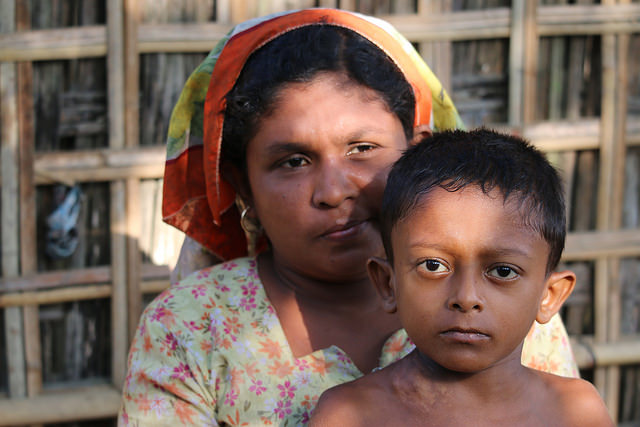
 Image Credit:
 Image Credit: