Sunday, 22 April 2018

Burmese dissident speaks frankly about his country’s persecution of the Rohingya

Source Mailchi, April 2018


On a recent Canadian tour, Maung Zarni talked about the need for truth. 


By Samantha Rideout


INTERVIEWS


Human rights activist Maung Zarni has been exiled from his native Myanmar (Burma) for speaking out against the military's ethnic cleansing of Rohingya Muslims.  

Q For people from Myanmar, or Burma as you often call it, being politically active comes at a high cost. You, for instance, were unable to visit your dying father and can't return to see your mother. What values do you hold that made you willing to pay that price? 

A It was my upbringing by my parents. If I did something they disapproved of, that was bad behaviour. But if I denied what I had done, that was worse, and that's when I would be punished. I just absolutely cannot stand blatant lies.

Q How has this value influenced your activism?

A In Burma, we're dealing with the type of lies that destroy millions of lives. For me, speaking out on the Rohingya issue wasn't as difficult as getting involved politically in the first place, three decades ago. In those days, I had concerns about whether the Burmese embassy knew about the activism I was doing as a student at the University of California. Would they harass my parents? I was living with those concerns for a long time. Gradually, I found myself doing more daring things. Then, finally, you cross a line and oppose the regime publicly, and you cannot go back.

Q You founded the Free Burma coalition in 1995 to oppose the military dictatorship. There have been significant, nominally democratic political reforms in recent years, but the military continues to hold tremendous sway. How do you feel about Myanmar's leadership today? 

A There was a period [beginning around 2004] when it seemed to me that there were good elements within the military who wanted the same things as I did for the country. For a window of three or four years, I attempted to work with the generals. I helped them meet foreign diplomats and officials [to start normalizing Burma's relations with the rest of the world], but I expected something in return. For instance, they would need to remove the restrictions on the internet — a little indication that they were prepared to allow the people a greater degree of freedom. I saw few gifts from them; it was just take, take, take. I finally knew it wasn't going to work after they blocked emergency aid to cyclone victims in 2008. The Americans, the British and others had sanctions on Burma at the time, and the Burmese suspected that the Americans would launch an attack if their aircraft were allowed in. An estimated 140,000 people died. When that happened, I stopped interacting with the military. The contacts I had at that time are now shoo-ins for the number-one positions in the administration.

Q So you personally know a lot of the people in power in Myanmar?

A I do, and on the civilian side, I also know the people who write articles justifying the atrocities against the Rohingya. Some of them were like younger brothers to me when we were studying together in the United States. They were activists, like me.

Q How exactly are people justifying the military atrocities, which include killings, widespread rape and razed villages? Apparently they're using Buddhism to do so?

A There are very elaborate justifications drawn from Buddhist theology and philosophy. [Last October], one of the most influential monks gave a three-hour sermon, about 20 minutes of which he devoted to justifying the killing of infidels. This monk would say that non-believers are only half-human, so even if you kill them by the millions in defence of your faith, that does not amount to bad karma. The venue and audience for his sermon were significant: it was to a group of hundreds of special commanders at a military training school, in a massive hangar.

Q Isn't Buddhism supposed to be a peaceful religion?

A Westerners are often disturbed when they hear that Buddhists are doing this, and that's because of Orientalism. There are two versions of Orientalism: one of them romanticizes the Other, and one demonizes and dehumanizes the Other. We Buddhists are subject to what I call "positive Orientalism." Religion is both an individual and a social practice. When something becomes social, it always has latent political potential.

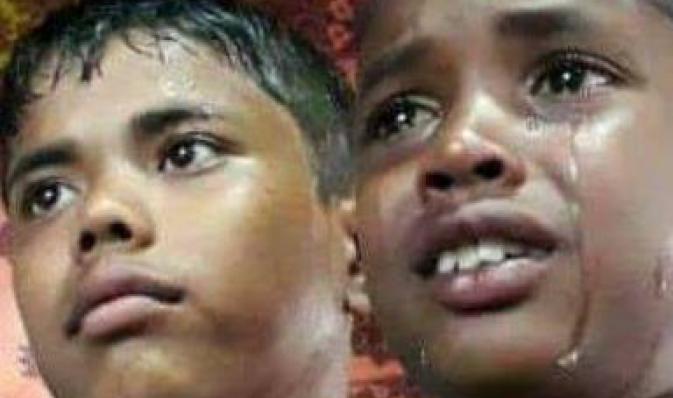
Q Since the violent military crackdown began last August, more than 600,000 Rohingya civilians have fled to refugee camps in Bangladesh. When you went there to meet with refugees, one man burst into tears to see a Burmese Buddhist who cared about Rohingya Muslims. Is it important to you to build religious bridges like this?

A Of course, although I actually just use Buddhism as a marker [of my ethnicity]. I'm essentially a humanist.

Q Do you see any role for interfaith activists in helping with the situation?

A I don't know. Interfaith activism sounds rather soft, but actually, I think we're talking about intellectual revolutionaries, people who can think across civilizational or faith lines. If Buddhist monks or Christian or Muslim clergy come with an attitude of "We want to have interfaith dialogue, but we're still the best," then that's not going to work, because you've got to be able see through to the essence of the other person.

Q You don't have much hope in the United Nations Security Council, which you've called "paralyzed." Do you see hope anywhere? 

A I have hope in people in general. I think that institutions can only mobilize through individuals. There are so many people with something to contribute. Maybe they can mobilize wider public opinion as church communities or filmmakers or whatever their background may be. At the same time, I'm not romantic about the prospect of seeing this resolved. I mean, we've got over 40 foreign ambassadors sitting in the capital of Burma where all the genocidal decisions are made, and no one is able to bring themselves to confront the government. No one is saying, "This must stop, and here's how we think it could be done." And many of the embassies, instead of talking about the survivors and the victims, refer to the region. They talk about "the crisis in Rakhine State" rather than "the Rohingya people." They comply with the Burmese government's demand that these people not be addressed by their own name.

Q Because to call them "Rohingya" would give them legitimacy? 

A Yes. The Rohingya were officially recognized as part of the Burmese ethnic tapestry, with full citizenship rights, from the time of independence from the British in 1948, well into the 1960s. What we are hearing today from the Burmese government, including [State Counsellor] Aung San Suu Kyi, is that they're actually illegal Bengali migrants and that there is no such group as the Rohingya.

Q Like other minorities in Myanmar, the Rohingya have some antigovernment militants among them. You've argued that Myanmar's leaders are trying to use this to pull the wool over the eyes of the international community, by claiming to target an organized terrorist threat. What makes this narrative effective?

A They're saying they're defending a sovereign state, and everybody understands that, especially their main audience of sovereign governments. Throw in "national security" or "anti-terror effort," and they're given a huge benefit of the doubt. But look at the facts on the ground. If the militants were really linked to any major terrorist network, they would be carrying AK-47s or better, not machetes and bamboo spears.

Q It sounds as though all of this offends the sense of truth your parents instilled in you. 

A It's an insult to common sense. 

This interview has been edited and condensed.

This story first appeared in The Observer's April 2018 edition with the title "Burmese dissident speaks frankly about his country's persecution of the Rohingya."


Myanmar Armed Forces Blacklisted By UN For Committing Sexual Violence Against Rohingya

Source undispatch, 17 April

For the first time ever, the UN secretary-general is including Myanmar Armed Forces on an annual blacklist of groups that are "credibly suspected" of carrying out sexual violence during conflict.

The report, presented Monday to the Security Council, says the acts were allegedly perpetrated during military "clearance" operations in October 2016 and August 2017, after a spate of insurgent attacks by members of the ethnic minority Rohingya community. The UN has since described the security operations as "ethnic cleansing."

Although the Myanmar Armed Forces, known as the  Tatmadaw, has been called out in previous UN reports for abuses against other ethnic minority groups, it now joins 51 other government and rebel groups on the conflict-related sexual violence "list of shame," as Human Rights Watch called it.

For generations, Rohingya Muslims in Myanmar's northern Rakhine state have struggled for citizenship and rights. But the Buddhist-majority population and government do not recognize Rohingya as an ethnic minority. Instead, they are called "Bengalis" and considered illegal migrants from neighboring Bangladesh. Tensions have flared into bloodbaths throughout the years.

Since the security operations began, nearly 700,000 Rohingya have fled across the border to Bangladesh. And according to the UN report, international medical staff and aid workers have reported that many of them "bear the physical and psychological scars of brutal sexual assault."

"The widespread threat and use of sexual violence was integral to their strategy, humiliating, terrorizing and collectively punishing the Rohingya community and serving as a calculated tool to force them to flee their homelands and prevent their return," UN Secretary-General Antonio Guterres wrote.

The report describes what it calls "specific and indicative" cases of sexual violence against Rohingya women and girls.

The United Nations verified the following specific and indicative cases of conflict-related sexual violence perpetrated during the military "clearance" operations in northern Rakhine: seven rapes reportedly perpetr ated by Tatmadaw elements in Buthidaung on 4 and 5 May; the rape of 32 Rohingya women and one girl, allegedly by the Tatmadaw and border guard police, also in Buthidaung, as part of perceived "punitive operations"; the rape of a girl by a Tatmadaw soldier in Maungdaw in January; 30 girls subjected to sexual violence by Government forces during military operations; and one girl allegedly raped by a member of the Arakan Rohingya Salvation Army. In early 2017, Tatmadaw soldiers allegedly raped a 16-year-old girl and her 20-year-old sister during operations in Maungdaw. After mentioning the incident to visiting journalists, she was arrested and forced to undergo a medical examination. On 30 August, a report was received of the alleged arbitrary detention and rape of several women in the village of Maung Nu in Buthidaung township. Three girls who reported sexual violence were provided with case management services in northern Rakhine, as well as four children who were victims of sexual assault, in central Rakhine. The prevailing security environment precludes more complete documentation, given the climate of impunity, intimidation, reprisals and access restrictions.

In November, UN Special Representative of the Secretary-General on Sexual Violence in Conflict Pramila Patten visited Rohingya camps in Bangladesh, where she heard accounts from "almost every woman and girl" of rape, gang rape, invasive body searches, forced nudity, sexual harassment and abduction for sex slavery. As security forces looted and burned down their villages, many Rohingya women who were impregnated by their rapists then set off by foot on a long and dangerous journey across the border.

The report linked the acts of sexual violence to a circulating narrative that high fertility rates among the Rohingya posed an existential threat to the majority population. Therefore, violence was carried out against women – including pregnant women – in an attempt to extinguish the Rohingya ethnic identity, and on young children, who represent the group's future.

So far, according to the report, 2,756 survivors of sexual and gender-based violence have received help in Bangladesh, but nearly half of the refugee settlement areas still lack basic sexual and reproductive health care and services for rape survivors.

Guterres also made note of alleged sexual violence against other ethnic minority groups amid escalating clashes that have not received as much international media attention in regions in such as Kachin, northern Shan and parts of the southeast.

Among many recommendations, he called on the Security Council to consider recognizing conflict-related sexual violence as grounds for refugee status and to address funding shortfalls for sexual and gender-based violence programs and for sexual and reproductive health care.

His report comes just as the Myanmar government announced it had repatriated the first group of Rohingya refugees – a family of five – according to a two-year deal signed by Bangladesh and Myanmar in November. But Bangladesh's Refugee Relief and Repatriation Commissioner Abul Kalam called the announcement "propaganda," while the UN Refugee agency said it had no prior knowledge of the case.

On Monday, the Security Council also heard from Rohingya lawyer Razia Sultana, who urged the council to refer the situation in Myanmar to the International Criminal Court for crimes against the Rohingya and other minority groups.

"The listing of the Tatmadaw is an overdue and welcome step," Joan Timoney, senior director of advocacy and external relations at the Women's Refugee Commission, said in a statement. "Impunity, discrimination and denial of citizenship lie at the heart of this world's fastest-growing refugee crisis."


Saturday, 14 April 2018

ICC prosecutor requests ruling on jurisdiction over Rohingya deportations

Source jurist, 10 April


[JURIST] International Criminal Court (ICC) [official website] prosecutor Fatou Bensouda on Monday filed a motion [PDF] with the president of the Court's Pre-Trial Division seeking a ruling on whether the Court may exercise jurisdiction over the alleged deportation of the Rohingya people from Myanmar to Bangladesh, which Bensouda contends is actionable under Article 7(1)(d) of the Rome Statute [text].

Noting that 670,000 Rohingya lawfully present in Myanmar have been intentionally deported across the border to Bangladesh since August 2017, Bensouda's office argued that the Court has the necessary jurisdiction under Article 12(2)(a) of the statute "because an essential legal element of the crime—crossing an international border—occurred on the territory of a State which is a party to the Rome Statute (Bangladesh)."

Bensouda further highlighted the characterization of the situation by UN High Commissioner for Human Rights Zeid Ra'ad Al Hussein and the UN Special Rapporteur on the situation of human rights in Myanmar Yanghee Lee [official profiles] as "a textbook example of ethnic cleansing" potentially bearing the "hallmarks of a genocide."

Article 7(1) of the statute defines "crime against humanity" as including, among other things, 1) murder; 2) torture; 3) enforced disappearance; 4) rape, sexual slavery, and enforced prostitution; 5) persecution against any identifiable group on political, racial, national, ethnic, cultural, religious, and/or gender grounds; 6) extermination; and 7) "deportation or forcible transfer of population." 

Much discussion in the motion focused on the distinction between deportation, which involves a cross-border element, and forcible displacement within a nation's borders. The motion notes that such a distinction is vital to the issue of jurisdiction because "[w]hile both safeguard the right of individuals to 'live in their communities' and homes, deportation also protects a further set of important rights: the right of individuals to live in the particular State in which they were lawfully present."

Emphasizing the broad scope of Article 19(3) empowering the prosecutor to "seek a ruling from the Court regarding a question of jurisdiction or admissibility," Bensouda stated:
The Prosecution is mindful that this is the first occasion on which it has sought a ruling under article 19(3). This course of action is justified by the exceptional circumstances at hand and it has been decided by the Prosecutor based on the discretion and independence vested in her by article 42 of the Statute. ... In the particular circumstances of this situation, and considering the unique nature of the issue in question, the Prosecutor therefore considers it appropriate to seek an article 19(3) ruling.
The motion was submitted to Judge Antoine Kesia-Mbe Mindua [official profile] who is now expected to assign it to a Pre-Trial Chamber based on a pre-established roster, unless its subject matter "'falls outside the competence of the Pre-Trial Chamber' or is 'manifestly frivolous.'"

Islamophobia & Myanmar Genocide: The “Unfinished Business” of the Rohingya Muslims

Source maungzarni, 

▶ 28:44   14 hours ago - Uploaded by Maung Zarni

Friday, 6 April 2018

Duterte slams Myanmar ‘genocide’ and offers to take Rohingya refugees

Source Philipineslifestyle, 5 April

MyanmarPresident Duterte took an unusually strong line on Myanmar, but spared Aung San Suu Kyi from criticism

President Duterte accused Myanmar of "genocide" and said he was willing to accept Rohingya Muslim refugees into the Philippines.

The UN says some 700,000 people have fled from Myanmar into Bangladesh since last August when Rohingya militant attacks sparked a military crackdown.

The UN and several Western countries have said the response constitutes ethnic cleansing but Myanmar rejects the charge. It says its security forces have been conducting legitimate operations against terrorists.

Duterte slams Myanmar 'genocide' and offers to take Rohingya refugees

Duterte slams Myanmar 'genocide' and offers to take Rohingya refugees


Tuesday, 3 April 2018

Oh Rohingya, who are you? And where is your homeland?

Source maungzarni, 30 March 


AddThis Sharing Buttons

Oh Rohingya, who are you? And where is your homeland?

Oh Rohingya
you are many things to many people.

Oh Rohingya
you are a name 50 million Myanmar are brainwashed to hate who know next to nothing about what's in a name.

Oh Rohingya
you are the content to erase from textbooks whose "not real" identity the snake-tongued Suu Kyi seeks to ban in her dubious Diplo-Speak

Oh Rohingya
you are a fundable project in the name of "local partners"

Oh Rohingya
you are an award-winning subject of reportage or documentary

Oh Rohingya
You are a legal volleyball played by human rights rights lawyers

On Rohingya
you are a security threat to nations and regions, potentially as "radical Islamicists";
never mind that you have not blown yourselves up in 40 years since your lot's genocide began.

Oh Rohingya
you are a new 'boat people' whose survival flights at night the United Nations bleached as "irregular movements"

Oh Rohingya
you are a subject of surveillance to many a "anti-terror sickos"
For you pray out loud to Allah when your infants are burned alive, and the world stand idly by.

Oh Rohingya,
you are a subject of worldwide charity, but the one which triggers no real solidarity.

Oh Rohingya
you are a subject of interest which neo-Orientalist academics & experts dissect, from Asian Studies to the US Institute of Peace

Oh Rohingya
you are sources of memories to extract, collate, compile and deposit in some posh Ivory Tower

Oh Rohingya,
you are an agenda item which UN councils will debate, closed doors, with neither substance nor results, for decades.

Oh Rohingya
you are creatures whose children have been orphaned by the hundreds of thousands

Oh Rohingya
you are a people whose women have been widowed, raped, maimed, & terrorised.

Oh Rohingya
you are this deeply pathetic world's Celebrities from Hell

Oh Rohingya
you are a subject of endless TV shows, academic debates, photography exhibits, and policy masturbation

Oh Rohingya
you are Myanmar Commander-in-Chief's "unfinished business",
the High Command's objects to exterminate,
the ground troops' preys of mass-rape, whom burn alive, mutilate, blow up, fire upon, bayonet, behead or cut throat, literally.

Oh Rohingya
you are our world's largest tribe of Survivors with No Promised Land to run to

Oh Rohingya
you are a people stranded on our Earth, shoved around like dirt by sovereign states,
you are a people without the Right to Belong or Settle-down

Oh Rohingya
you are a people in desperate need of a Protected Homeland.
----------
In deep disgust, I wrote the poetry this afternoon after feeling rather outraged and dismayed at what I have been observing everyday about the "Rohingya crisis" over the last 6 years.
Ultimately, it is the crisis of Humanity itself, the crisis that exposes this deeply inhumane and immoral world run by those with neither the intellectual vision nor human compassion.
ZARNI, UK – 30 March 2018