Thursday, 20 June 2019

A new report on the Rohingya crisis reveals systemic problems within the UN

Source WUWM, 

Listen
Listening...
2019_0619_09.mp3

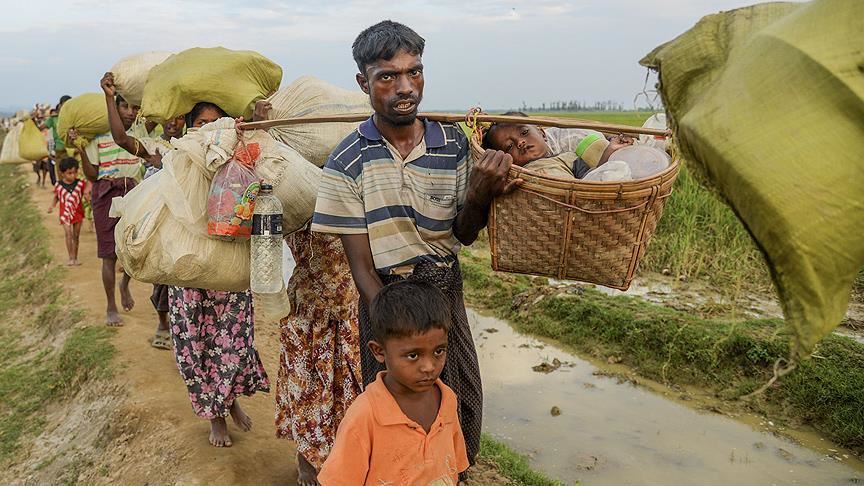
The United Nations is condemning itself over its handling of the crisis involving Myanmar's Rohingya minority. Over the past decade, nearly 1 million Rohingya have escaped violence and persecution in Myanmar. The mass exodus attracted worldwide attention and criticism over the UN's role.

UN Secretary-General António Guterres called for an independent review covering eight years of the UN's response to the crisis. The report, which came out this week, concluded that while Myanmar's government was mainly responsible for the human rights abuses, the UN had systemic failures that shared responsibility.

John Sifton is the Asia advocacy director for Human Rights Watch. He shared his thoughts with The World's Carol Hills about what exactly went wrong with the UN's handling of the Rohingya crisis. 

Carol Hills: John, according to the review, what did the UN get wrong?

John Sifton: The United Nations made several of the same errors that they've made in previous catastrophes. They've failed to elevate human rights concerns to the leadership level and buried information that humanitarians on the ground had gathered at great risk. Keep in mind, this is the second time there's been a report like this in the context of a mass killing. If the UN is ever going to fix these problems, it has to hold people accountable for their individual failures.

Related:  Myanmar: Invest here, please. Don't mind the insurgents.

When was the first time this happened?

The reason that this is such an unpleasant deja vu is because a similar— and much more scathing — report was issued after the 2009 violence in Sri Lanka that claimed the lives of tens of thousands of people at the end of Sri Lanka's civil war. That report was even more scathing than this report and resulted, unfortunately, with no serious reforms.

This review is pretty scathing. It uses terms like "obviously dysfunctional performance," "a culture of mistrust" and "mixed and incomplete signals coming from the field." Can you be more clear on what happened here? Do people go to a supervisor and say, "This is what's going on the ground," and then the supervisor just ignores it? What was happening?

The UN It's not a monolithic institution. There are separate agencies and what essentially happened here is that key officials at certain departments, like the people tasked with the humanitarian and emergency response and the people tasked with human rights, had their inputs ignored or suppressed by what they call the coordinator on the ground. That was resulting in poor information flowing into New York at the leadership level.

Why was this happening? Why was the information not being passed on?

It's a systemic problem, not just for the United Nations, but within the humanitarian world. Because of the quest for access to populations with needs, everything is sacrificed. We will censor ourselves and we will go soft on this country so that we can preserve our access to those vulnerable populations that need. Now, it's understandable that there's desire to get access to populations in need, but it can't come at the larger expense of being strong on human rights. That is the lesson of Sri Lanka that was disregarded in this [context]. That is the lesson of the past that they failed to heed in Burma.

Related: A spoken word poet in Myanmar speaks out against hate and injustice

What were the consequences of that?

The consequences are that you now have a situation where Burma has learned that they can be recalcitrant and obdurate and get away with it. It's been asked if others are to blame and absolutely the United Nations is not alone. Member states who were concerned about the killings failed to press the United Nations and many countries, although they spoke about their outrage at what was going on, failed to bond together and lay down tough terms to the Myanmar government. They needed to say, "If you don't start cooperating with the United Nations there are going to be real-world consequences: sanctions, travel bans and the like." So, it's not just the UN, it's the UN and its member-states that failed to hold Burma's feet to the fire.

So, what now? We've got this information, how do we avoid this happening again?

The real lesson is that individual UN staff who suppress human rights reporting and fail to allow human rights investigators to properly brief the leadership need to be held accountable and not promoted or not shuffled into a new post at some other country, but fired.

This interview has been edited and condensed for clarity. 

From PRI's The World ©2019 PRI

Thursday, 6 June 2019

FACEBOOK: CLOSE BURMA MILITARY FACEBOOK PAGES – MORE THAN 25 PAGES STILL HOSTED

Source BurmacampaignUK, 5 June

Burma Campaign UK today called on Facebook to remove more than 25 Burmese military linked Facebook Pages on its site.

The Pages are either run by the military, or by military-owned or controlled companies, or exactly reproduce military propaganda but may not be directly run by the military. The Myanmar Air Force Facebook Page even has a blue tick showing it has been verified by Facebook.

Facebook has recently faced severe criticism from the United Nations, US Congress and British Parliament for failing to take action to prevent its platform being used to spread hatred and incite violence against the ethnic Rohingya and Muslims in Burma.

Despite closing some military Facebook Pages, including the page for Min Aung Hlaing, the head of the military, Facebook has left several official military pages on its site. It is hosting an organisation the United Nations has stated should be prosecuted for genocide.  The military Facebook Pages, with close to 300,000 followers, can be used at any time to incite hatred and build support for further military offensives against ethnic and religious minorities.

The United Nations Fact-Finding Mission has stated that doing business with the military is indefensible and called for the financial isolation of the military, yet Facebook hosts 22 Facebook Pages for military-owned and controlled businesses, enabling them to promote their business in order to increase profits which go to the military.

"Facebook should not be hosting any form of Burmese military accounts, said Mark Farmaner, Director of Burma Campaign UK. "Whether the Facebook Pages are spreading military propaganda or promoting military-owned business, either way they are promoting part of an institution responsible for genocide, war crimes and crimes against humanity."

Facebook has also failed to fully implement the nine recommendations made to it by the United Nations Fact-Finding Mission on Myanmar, including on a genuinely independent investigation into how posts on their platform have led to real world discrimination and violence.

Facebook has been placed on the 'Dirty List' published by Burma Campaign UK because of its failure to implement the UN Fact-Finding Mission recommendations, its hosting of Burmese military pages, and its hosting of racist and discriminatory posts and pages by the Burmese government.View the Dirty List here.

Despite claims it is committed to tackling hate speech, Facebook has refused to take down the Information Committee Page of the Burmese government. This Page, which at the time was called the State Counsellors Information Committee Page, instigated fear and hatred of the Rohingya ahead of and during the 2017 military offensive. Even more so than Min Aung Hlaing's Facebook Page. Facebook also refuses to take down the 'Fake Rape' sign on this Facebook page, part of a government campaign denying that rapes were taking place, despite this being verified by the United Nations and numerous other legal, media and human rights organisations.

Information Committee page:
https://www.facebook.com/InfomationCommittee/

One of the posts using the racist term Bengali to refer to the Rohingya:
https://www.facebook.com/InfomationCommittee/posts/786270838212691?

Another one of the posts using the racist term Bengali to refer to the Rohingya:
https://www.facebook.com/InfomationCommittee/posts/788328661340242?__tn__=K-R

One of the times the Information Committee Page featured an story implying the UN was helping ARSA, inciting hatred of the UN and endangering aid workers: https://www.facebook.com/InfomationCommittee/photos/a.639477959558647/786189564887485/?type=3&theater

Fake Rape picture on Information Committee Page:
https://www.facebook.com/InfomationCommittee/photos/a.639477959558647/660386870801089/?type=3&theater

List of Military Pages:

Myanmar Air Force (has blue tick)

Myanmar Navy

Myanmar Military News

UTC – 1

Our Tatmadaw Magazine

Myo Chit Myanmar Army (There is nothing except Tatmadaw)


List of Military-owned or controlled companies:

(This is not a comprehensive list and there may be more military-controlled companies on Facebook).

Mytel

Myanmar Economic Corporation

Myanmar Brewery

Gandamar Grand Ballroom

Gandamar Ballroom Pathein

Shwe Gandamar Wholesale

Myawaddy Newspaper

Mandalay Brewery

Dagon Beverages

Bandoola Transport/Parami

MECTEL

MECTEL

MECTEL

Kan Thar Yar Hospital

Indoor Skydiving Yangon

Myawaddy Bank

Myanmar Mobile Money

Tri Star Tyres

Shwe Phe Oo Tea

Myawaddy TV

Myawaddy TV

Myawaddy TV

Tuesday, 28 May 2019

Myanmar soldiers jailed for Rohingya massacre freed after months

Source Aljazeera, 27 May

Troops released in November 2018 after serving less than one year of their 10-year prison terms, Reuters report says.


Ten Rohingya men with their hands bound kneel as members of the Myanmar security forces stand guard in Inn Din village on September 2, 2017 [Handout via REUTERS] [Reuters]

MORE ON ASIA PACIFIC

Myanmar has granted early release to seven soldiers jailed for the killing of 10 Rohingya men and boys during a 2017 military crackdown in the western state of Rakhine, two prison officials, two former fellow inmates and one of the soldiers told Reuters news agency.

The soldiers were freed in November last year, the two inmates said, meaning they served less than one year of their 10-year prison terms for the killings at Inn Din village.

They also served less jail time than two Reuters reporters who uncovered the killings. The journalists, Wa Lone and Kyaw Soe Oo, spent more than 16 months behind bars on charges of obtaining state secrets. The two were released in an amnesty on May 6.

Win Naing, the chief warden at Rakhine's Sittwe prison, and a senior prison official in the capital, Naypyitaw, confirmed that the convicted soldiers had not been in prison for some months.

"Their punishment was reduced by the military," said the senior Naypyitaw official, who declined to be named in the Reuters report that was published on Monday.

Both prison officials declined to provide further details and said they did not know the exact date of the release, which was not announced publicly.

Military spokesmen Zaw Min Tun and Tun Tun Nyi declined to comment.

'I am a journalist and I am going to continue': Reuters ... - YouTube

▶ 2:14

'I am going to continue': Reuters reporters freed in Myanmar (2:13)

The seven soldiers were the only security personnel the military has said it has punished over the 2017 operation in Rakhine, which drove more than 730,000 Muslim-majority Rohingya to flee to Bangladesh. United Nations investigators said the crackdown was executed with "genocidal intent" and included mass killings, gang rapes and widespread arson.

READ MORE

Myanmar's political prisoners struggle with life after jail

Myanmar denies widespread wrongdoing and officials have pointed to the jailing of the seven soldiers in the Inn Din case as evidence Myanmar security forces do not enjoy impunity.

"I would say that we took action against every case we could investigate," the military's commander in chief, Senior General Min Aung Hlaing, told officials from the UN Security Council in April last year, according to an account posted on his personal website.

The army chief cited the Inn Din case specifically. "The latest crime we punished was a killing, and 10 years' imprisonment was given to seven perpetrators," he said. "We will not forgive anyone if they commit (a) crime."

Reached by phone on Thursday, a man named Zin Paing Soe confirmed that he was one of the seven soldiers and that he was now free, but declined to comment further. "We were told to shutup," he said.

'First step'

The 2017 campaign was launched across hundreds of villages in northern Rakhine in response to attacks by Rohingya fighters. Reuters exposed the killings in a report published in February 2018. 

Troops from the 33rd Light Infantry Division, a mobile force known for its brutal campaigns, worked with members of a paramilitary police force and Buddhist vigilantes to drive out the entire Muslim population of Inn Din, burning and looting Rohingya homes and property, according to Buddhist and Muslim villagers and members of the security forces.

On September 1, 2017, soldiers and some villagers detained a group of 10 Rohingya. The military said the men were "terrorists"; their family members said they were farmers, high school students and an Islamic teacher.

The next morning, witnesses said, Buddhist villagers hacked some of the Rohingya men with swords. The rest were shot by Myanmar troops and buried in a shallow grave.

Watch : Al Jazeera English - A letter from a Rohingya | Facebook

▶ 3:08

The two Reuters reporters, Wa Lone, 33, and Kyaw Soe Oo, 29, discovered the grave and obtained pictures of the 10 men before and after they were killed.

READ MORE

In Pictures: Tears of joy as journalists walk free in Myanmar

The journalists were arrested in December 2017 while investigating the killings and later sentenced to seven years in prison under the Official Secrets Act.

Defence lawyers argued their arrest and prosecution were aimed at blocking their reporting, and one police officer testified that a senior police official had ordered that the reporters be set up and arrested.

In April 2018, after launching an investigation into the killings, the military announced that four officers and three soldiers of other ranks had been dismissed from the military and sentenced to 10 years with hard labour for "contributing and participating in murder". Neither their names nor details of their roles in the killing were disclosed.

Civilian leader Aung San Suu Kyi welcomed the convictions, telling reporters at the time the sentencing was Myanmar's "first step on the road of taking responsibility".

Suu Kyi's spokesman, Zaw Htay, did not pick up a call seeking comment on the release of the seven soldiers.

Will UN's Myanmar 'genocide' accusation amount to change? | Al ...

▶ 2:39

Will UN's Myanmar 'genocide' accusation amount to change?

'Year that changed my life'

Two men who recently spent time in Sittwe prison told Reuters the seven soldiers were well-known among prisoners there.

"We were in the same building but different cells," said one of the men, Aung Than Wai, a political activist from Sittwe, who spent nearly six months in prison under a privacy law after he criticised a state official and posted an image of the official online.

Aung Than Wai, who was released from Sittwe in December, said he wanted to speak publicly about the soldiers' early release because an ethnic Rakhine Buddhist villager also jailed over the Inn Din killings was still in prison. The villager, school teacher Tun Aye, is serving a five-year sentence for murder at Buthidaung Prison in northern Rakhine, said his lawyer, Khin Win.

The convicted soldiers in Sittwe were given beer and cigarettes even though such indulgences were off-limits to other prisoners, Aung Than Wai said.

The soldiers were also visited by army officials, said the second man who was in the prison at the time and asked not to be named. In November, the seven men were taken away in a military vehicle, he said.

The same month, Zin Paing Soe, one of the convicted soldiers, set up a new Facebook account, noting in his biography that he attended the military's elite Defence Services Academy.

In one of the account's first public posts, he said he was looking forward to the end of a year spent mostly in prison.

"When will these unfortunate things end for me?" the post reads. "The year that totally changed my life: F*** 2018."

Reporting Myanmar's Rohingya story | The Listening Post ...

video

▶ 9:53

SOURCE: REUTERS NEWS AGENCY

Thursday, 16 May 2019

UN investigators urge nations to snap financial ties with Myanmar military

Source thedailystar, 14 May

Reuters, Yangon

Myanmar's military commander-in-chief, Senior General Min Aung Hlaing shakes hands with a participant during the annual Moscow Conference on International Security (MCIS) in Moscow, Russia April 24, 2019. Photo: Reuters 
The world must cut off financial and other support for Myanmar's armed forces, a UN fact-finding mission said today, repeating a call for top generals to be prosecuted for abuses against the Rohingya Muslim minority.

Myanmar security forces are accused of killings, gang rape and arson during a crackdown that drove more than 730,000 people to flee western Rakhine state for neighbouring Bangladesh after attacks on police posts by Rohingya insurgents in August 2017.

Myanmar has rejected most of the accusations and dismissed a report last September by the UN-appointed panel, which said military officers carried out the campaign against the Rohingya with "genocidal intent" and should stand trial.

Autralian human rights lawyer and panel member Christopher Sidoti said it had seen no evidence Myanmar was trying to resolve the crisis or ease the safe return of refugees.

Myanmar has barred the experts from visiting the country, but they visited the region, including refugee camps in Bangladesh's Cox's Bazar district, beginning early this month.

"Due to the gravity of the past and continuing violations, attention must be given to the political, economic and financial ties of the Myanmar military, to identify who and what should be targeted," Sidoti said.

That would aid efforts to cut off the money supply, as a means of boosting pressure and reducing violence, he added.

The statement did not identify specific nations. Myanmar's military buys weapons from China and Russia, among others. Many Western countries have supended training programs over human rights abuses and impose arms embargoes.

Myanmar rejected the fact-finding mission when it was formed at the Human Rights Council in Geneva in March 2017, with a mandate to investigate military abuses against the Rohingya and in other conflicts with ethnic armed groups in Myanmar.

Government spokesman Zaw Htay did not immediately answer a telephone call to seek comment.

Military spokesman Major General Tun Tun Nyi said the military would investigate allegations backed by evidence but the fact-finding mission had levelled false accusations at troops.

"Our country is an independent country, so we don't accept our matters being interfered with," he told Reuters by telephone.

The military was cooperating with a government-appointed panel on alleged abuses in Rakhine, Tun Tun Nyi said. Human rights campaigners say it lacks credibility.

The UN panel said it was still receiving reports of human rights abuses in Rakhine and Chin states, where clashes between the military and insurgents from the mainly Buddhist Rakhine ethnic group since late last year have displaced more than 30,000 people.

Thursday, 9 May 2019

'Money interests fuel world neglect of Rohingya crisis'

Source AA, 3 May

Expert says Rohingya issue ignored for many reasons, citing in particular Myanmar's alliance with several countries

'Money interests fuel world neglect of Rohingya crisis'

ANKARA

The world is ignoring the Rohingya crisis for several reasons, said an NGO leader in Canada on Friday, citing in particular the alliance of Myanmar's government with China, India, Israel, and Russia as well as the global climate of Islamophobia. 

"Both India and China have a strategic economic interest in Myanmar. The Myanmar government recently agreed to the China-Myanmar Economic Corridor (CMEC) agreement, which is part of China's Belt and Road Initiative," Yuriko Cowper-Smith, a board member at the NGO Canadian Rohingya Development Initiative (CRDI), told Anadolu Agency.

Starting in China's Yunnan province, Cowper-Smith explained, the economic corridor goes through Mandalay and Yangon, and reaches Myanmar's coast at the Kyaukphyu Special Economic Zone (SEZ) in Rakhine state, the site of a brutal 2017 crackdown on the Rohingya.

"Neither India nor China would want to upset this status quo with any sort of international intervention, and so neither government will broach the Rohingya issue with the Burmese [Myanmar] government, let alone the United Nations," she added.

"Therefore, the UN Security Council avenue is closed as a possibility."

She downplayed any expectations of the U.S. or NATO taking action, saying: "The likelihood of this option seems low, as President Trump is not a fan of the UN system or of transnational justice."

She added: "Although a Muslim nation, which has a significant Rohingya refugee population, Saudi Arabia also has economic interests in Rakhine state, which lessens the likelihood of them speaking out against the Burmese state."

Cowper-Smith added that the global climate of Islamophobia, fear of terrorism, as well as the lack of access to Rakhine state by international observers lessens the likelihood of international involvement.

Rohingya meeting

NGOs, human rights activists, academics, and lawyers convened in Toronto, Canada last month to discuss the progress since the release of a report by Canada's special envoy to Myanmar in 2018.

Bob Rae's report -- Tell them we are human: What Canada and the world can do about the Rohingya crisis -- was published last year to draw attention to the humanitarian crisis faced by Rohingya refugees who have been fleeing systematic persecution by Myanmar's army and government.

Experts discussed several key issues related to the crisis such as the lack of coordinated international response against Myanmar, urgent issues in the refugee camps, and the steps Canada could take to alleviate the plight of Rohingya refugees.

According to the experts, if the international community fails to take immediate action, the following problems will only get worse:

  • Exploitation, human trafficking, systemic rape by Myanmar officials and soldiers in refugee camps
  • Lack of access to health and schooling
  • Urgent need for flood-resistant, cyclone-resistant housing
  • Mental, physical, and psychological trauma

Experts agreed to sustain the dialogue on the Rohingya and also recommended putting international court pressure on the Myanmar army.

International Rohingya observers say the generals in Myanmar's army are worried about the possibility of being prosecuted for crimes against humanity.

Recommendations to Canadian officials

Experts recommended establishing better relationship with political parties and the Canadian public to raise awareness of the crisis.

They also urged Canadian authorities to provide scholarships and a pathway to resettlement for Rohingya students in Canada.

Participants added that Canadian officials should continue to work with Bangladesh to allow refugee visas, especially to women and children.

Persecuted people

The Rohingya, described by the UN as the world's most persecuted people, have faced heightened fears of attack since dozens were killed in communal violence in 2012.

According to Amnesty International, more than 750,000 Rohingya refugees, mostly women and children, have fled Myanmar and crossed into Bangladesh after Myanmar forces launched a crackdown on the minority Muslim community in August 2017.

Since Aug. 25, 2017, nearly 24,000 Rohingya Muslims have been killed by Myanmar's state forces, according to a report by the Ontario International Development Agency (OIDA).

More than 34,000 Rohingya were also thrown into fires, while over 114,000 others were beaten, said the report, titled "Forced Migration of Rohingya: The Untold Experience".

Some 18,000 Rohingya women and girls were raped by Myanmar's army and police and over 115,000 Rohingya homes were burned down and 113,000 others vandalized, it added.

The UN has also documented mass gang rapes, killings – including of infants and young children – and brutal beatings and disappearances committed by Myanmar state forces.

In a report, UN investigators said such violations may have constituted crimes against humanity and genocidal intent.

Anadolu Agency website contains only a portion of the news stories offered to subscribers in the AA News Broadcasting System (HAS), and in summarized form. Please contact us for subscription options.

UN Aid Chief: No Progress So Rohingya Can Return to Myanmar

Source nytimes, 29 April

UNITED NATIONS — The U.N. humanitarian chief said Monday there has been "no progress" in dealing with the reasons why more than 700,000 Rohingya Muslims fled to Bangladesh from western Myanmar's Rakhine state.

Mark Lowcock, who just returned from a visit to Bangladesh, said Myanmar has failed "to put in place confidence-building measures that would persuade people it's safe to go back."

He said all the refugees he spoke to didn't think it was safe to return, and want to be assured of things like freedom of movement and access to education, jobs and services.

Buddhist-majority Myanmar has long considered the Rohingya to be "Bengalis" from Bangladesh even though their families have lived in the country for generations. Nearly all have been denied citizenship since 1982, effectively rendering them stateless, and they are also denied freedom of movement and other basic rights.

The latest crisis began with attacks by an underground Rohingya insurgent group on Myanmar security personnel in August 2017 in northern Rakhine. Myanmar's military responded with a brutal campaign and is accused of mass rape, killings and the burning of thousands of homes that critics have described as ethnic cleansing, or even genocide.

Lowcock told a small group of reporters he is "extremely worried" that the U.N. appeal for $962 million to provide for the Rohingya refugees and their host communities in Bangladesh this year is only 17% funded.

"I think the world may be losing interest," he said. "Last year, we got 70% what we asked for. We're running way behind."

He warned that "if we don't get financed, the consequences will be serious" for the provision of such things as food rations and health services.

Lowcock visited Bangladesh with U.N. refugee chief Filippo Grandi and Antonio Vitorino, head of the International Office for Migration. In a joint statement, they stressed the need to sustain support for the Rohingya refugees and to keep working for "safe and sustainable solutions" so they can return home.

They noted that almost half the 540,000 refugee children under age 12 are missing out on education and the rest are only getting very limited schooling.

"I think the world ought to worry about what this very large group of people will be like in 10 years' time if they don't get an opportunity to access education and a chance to develop a livelihood and have a normal life," Lowcock told reporters.

While the best solution would be for the refugees to return home, he said, "in any event it's a bad idea to run the risk of a very aggrieved, disaffected large group of young people, especially young men."

Lowcock said Bangladesh's government expressed concern to the three U.N. officials during the trip about criminal activity among refugees in the Cox's Bazaar area."There are well-known concerns about the drugs industry trying to use populations in Cox's Bazaar to support their malign activities," Lowcock said, adding that there are also concerns about possible radicalization of refugees.