Saturday, 7 December 2019

Questions and Answers on Gambia’s Genocide Case Against Myanmar before the ICJ

Source HRW, 5 Dec

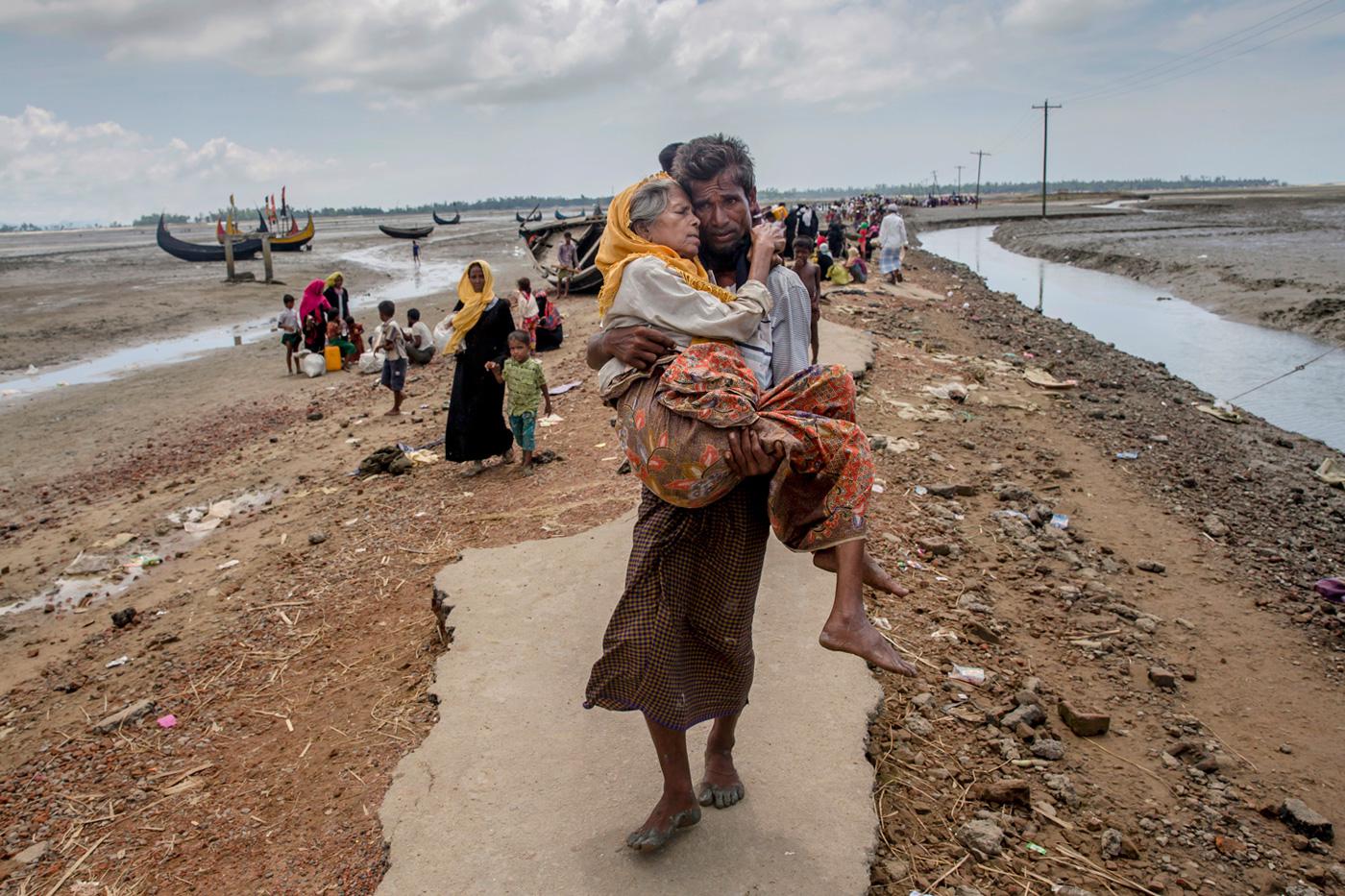
Abdul Kareem, a Rohingya Muslim, carries his mother, Alima Khatoon, to a refugee camp after crossing from Burma into Bangladesh on Sept. 16, 2017.

 
© 2017 Dar Yasin/AP

Why has Gambia filed a case against Myanmar before the International Court of Justice?

Why is this case important?

Will Myanmar respond to Gambia's ICJ case?

How could the ICJ enforce a provisional measures order?

What has Gambia alleged in its complaint against Myanmar?

What relief can the ICJ provide to victims if it rules in favor of Gambia?

Who are the ICJ's judges?

Has the ICJ ruled on other genocide cases?

Are there efforts to bring individual perpetrators in Myanmar to justice?

What are the prospects for justice in Myanmar?

1.Why has Gambia filed a case against Myanmar before the International Court of Justice?

Myanmar's military, known as the Tatmadaw, has committed extensive atrocities against ethnic Rohingya Muslims, including murder, rape, and arson. These abuses reached their peak during the Tatmadaw's brutal ethnic cleansing campaign, beginning in August 2017, that forced more than 740,000 Rohingya to flee to Bangladesh. These crimes have been thoroughly documented by the United Nations, the media, and human rights groups, including Human Rights Watch.

Gambia – with the backing of the 57 members of the Organisation of Islamic Cooperation – has filed a case before the International Court of Justice (ICJ) alleging that Myanmar's atrocities against the Rohingya in Rakhine State violate various provisions of the Convention on the Prevention and Punishment of the Crime of Genocide ("the Genocide Convention"). Gambia, which ratified the convention in 1978, brought the case under article 9 of the convention, which allows for disputes between parties "relating to the responsibility of a State for genocide" and related acts to be submitted to the ICJ by any party. The ICJ previously confirmed that all member states of the convention have a duty to prevent and to punish genocide. Myanmar has been a party to the Genocide Convention since 1956.

The case before the ICJ is not a criminal case against individual alleged perpetrators and it does not involve the International Criminal Court (ICC), a separate body (see below). Rather, the case is "state-to-state" litigation between UN member states governed by legal provisions in the UN Charter, the ICJ Statute, and the Genocide Convention.

Gambia's filing marks the first time that a country without any direct connection to the alleged crimes has used its membership in the Genocide Convention to bring a case before the ICJ. Gambia has only recently emerged from the repressive 22-year rule of Yahyah Jammeh and its own difficult history of human rights violations. After filing the case, Gambian Justice Minister Abubacarr Tambadou said that "the aim is to get Myanmar to account for its action against its own people: the Rohingya."

2.Why is this case important?

The Tatmadaw's well-documented crimes against the Rohingya and other ethnic minority groups in Myanmar span decades, but until Gambia brought a case before the ICJ, the government's atrocities had largely been beyond the reach of justice.

While the case may take many years to reach a final ruling, Gambia has asked the court for an order for provisional measures "to protect the rights of the Rohingya group and those of The Gambia under the Genocide Convention, and to prevent the aggravation or extension of the dispute pending the final judgment of the Court." The hearing on provisional measures will take place on December 10-12, 2019 in The Hague, Netherlands.

Among the provisional measures that Gambia has requested the court to order "as a matter of extreme urgency" are that Myanmar should immediately take all measures to prevent all genocidal acts; Myanmar should ensure that the military does not commit any genocidal acts; and Myanmar should not destroy or render inaccessible any events related to the underlying application.

The timeline for a decision on the provisional measures can be relatively quick. Bosnia and Herzegovina asked for provisional measures when filing its Genocide Convention case against the Federal Republic of Yugoslavia on March 20, 1993. In that case the ICJ issued an order several weeks later, on April 8, 1993.

3.Will Myanmar respond to Gambia's ICJ case?

Myanmar announced that State Counsellor Aung San Suu Kyi, in her capacity as foreign affairs minister, will lead its delegation to the ICJ to "defend the national interests of Myanmar." In doing so, she reportedly enjoys the support of her political party, the National League for Democracy, and the Myanmar parliament. The military has said it "will fully cooperate with the government" and follow its instructions. The government explicitly noted that all members of the UN, including Myanmar, are bound by the ICJ Statute.

While public support in Myanmar for Aung San Suu Kyi's decision to represent the country before the ICJ is reportedly high, those who might want to criticize her or the government would do so at considerable risk. Myanmar authorities have frequently arrested and prosecuted people speaking or writing critically of the government, military, and officials.

Still, some representatives of ethnic groups both inside and outside the country have issued statements backing the ICJ proceedings, noting similarities in the Tatmadaw's brutal tactics against the Rohingya and other minority communities.

4.How could the ICJ enforce a provisional measures order?

The ICJ's provisional measures orders are legally binding on the parties. Myanmar's explicit recognition of the ICJ's authority should dispense with any legal question as to whether the government needs to comply with the court's orders and decisions. Gambia has also asked the court to require Myanmar and Gambia to provide the court with a report on steps taken to implement a provisional measures order "no later than four months from its issuance."

Other UN bodies could take steps to increase the power of the ICJ's order and, by extension, increase the political cost should Myanmar fail to comply.

Under article 41(2) of the ICJ Statute, the court's provisional measures orders are automatically sent to the UN Security Council. Such an order would increase pressure on the council to take concrete action in Myanmar, including through a binding resolution to address some of the indicators of genocidal intent outlined in the comprehensive 2018 report of the UN Independent International Fact-Finding Mission on Myanmar ("Fact Finding Mission").

For example, the Security Council could pass a resolution directing Myanmar to lift restrictions on Rohingya's freedom of movement, eliminate unnecessary restrictions on humanitarian access to Rakhine State, repeal discriminatory laws, and ban practices that limit Rohingya access to education, health care, and livelihoods. Thus far, the Security Council has been deadlocked on Myanmar, in part because of China's support for Myanmar's leadership and its veto power.

The UN General Assembly can also reinforce the weight of an ICJ order on Myanmar by passing a resolution urging the government to comply with its terms.

5.What has Gambia alleged in its complaint against Myanmar?

Establishing that genocide has taken place under the Genocide Convention requires demonstrating genocidal intent and genocidal acts, meaning the state had the intent to destroy a national, ethnic, racial, or religious group in whole or in part.

In 2018, the Fact-Finding Mission presented a comprehensive analysis of the Rohingya's status as a protected group, genocidal acts, and indicators of genocidal intent and concluded that "the actions of those who orchestrated the attacks on the Rohingya read as a veritable check-list" on how to destroy the target group in whole or in part. The Fact-Finding Mission further concluded in 2019 that "the State of Myanmar breached its obligation not to commit genocide under the Genocide Convention."

Gambia's application identifies two elements of Myanmar's persecution of the Rohingya as "particularly indicative of genocidal intent": its systematic denial of legal rights to Rohingya, notably restrictions on their ability to marry and bear children and severe restrictions on freedom of movement, including detention camps, and its support for, and participation in, pervasive hate campaigns aimed at demonizing and dehumanizing the group.

As for the genocidal acts, the application points to incidents from the October 2016 and August 2017 "clearance operations" including mass executions of Rohingya men, women, and children; the systematic burning of Rohingya villages "with the intent to destroy the group in whole or in part"; the targeting of children; and the commission of rape and sexual violence on a massive scale.

As for ongoing acts of genocide, the application highlights continuing attacks on the Rohingya, notably the destruction of more than 30 villages between November 2018 and May 2019 and the denial to Rohingya of access to food. It also notes the Fact-Finding Mission's recent warning that the 600,000 Rohingya still in Myanmar live under the threat of further genocidal acts by Myanmar.

6.What relief can the ICJ provide to victims if it rules in favor of Gambia?

Gambia has asked the court to declare that Myanmar has and continues to breach its obligations under the Genocide Convention; must cease ongoing genocidal acts and fully respect its obligations moving forward; must ensure that perpetrators of genocide are held to account before a competent tribunal; and must provide reparations to Rohingya victims of genocidal acts, including "allowing the safe and dignified return" of those who have been forcibly displaced and "respect for their full citizenship and human rights and protection against discrimination, persecution and other related acts." Gambia has also asked that Myanmar offer assurances and guarantees of non-repetition of violations of the Genocide Convention.

Under article 94 of the UN Charter, all member countries must abide by ICJ decisions in cases to which they are a party, and in the event of non-compliance, the UN Security Council may "decide upon measures to be taken to give effect to the judgment."

7.Who are the ICJ's judges?

The ICJ's 15-member bench is composed of judges from different countries representing the world's main legal systems. ICJ judges work independently of any government and before taking up their duties, must solemnly declare in open court that they will "exercise their powers impartially and conscientiously." Each judge is elected to serve a nine-year term.

Under article 31 of the ICJ Statute, a party to a case before the ICJ can appoint an ad hoc judge to act in the case if it does not already have a judge of its nationality on the bench.

Gambia has asked the court to appoint South African jurist Dr. Navanethem (Navi) Pillay as its ad hoc judge. Pillay served as a judge on the International Criminal Tribunal for Rwanda and the International Criminal Court before becoming the UN High Commissioner for Human Rights from 2008 to 2014.

Myanmar has asked the court to appoint German academic Professor Claus Kress as its ad hoc judge. Kress is the director of the Institute of International Peace and Security Law at the University of Cologne, Germany.

8.Has the ICJ ruled on other genocide cases?

In 2007, the ICJ ruled that there was a genocide in the Srebrenica enclave in Bosnia and Herzegovina, and that Serbia violated its duty to prevent genocide. The court also ruled that Serbia violated its duty to punish genocide by failing to surrender Bosnian Serb general Ratko Mladic, one of the architects of the Srebrenica genocide, to the International Criminal Tribunal for the former Yugoslavia for prosecution. Serbia finally surrendered Mladic to the Yugoslav tribunal in 2011.

9.Are there efforts to bring individual perpetrators in Myanmar to justice?

In November, the International Criminal Court's judges gave Prosecutor Fatou Bensouda authorization to open an investigation into crimes against humanity, notably the forced deportation in 2017 of more than 740,000 Rohingya into Bangladesh, an ICC member. ICC judges previously confirmed that the court had jurisdiction because the crime of deportation was completed in an ICC member country. The judges also ruled that the prosecutor can investigate other crimes, including future crimes, if they are within the ICC's jurisdiction and are sufficiently linked to the situation described in the prosecutor's request – which focused on crimes committed during two waves of violence, in 2016 and 2017 in Rakhine State – since Bangladesh became an ICC member in June 2010.

Myanmar is not a member of the Rome Statute, the court's founding treaty, so only the UN Security Council can refer all grave crimes in Myanmar to the ICC for investigation. An ICC referral remains critical to address the full scope of criminality in Rakhine State and in Kachin and Shan States, where the military has used many of the same brutal tactics against other ethnic minorities. An ICC referral would also give the court jurisdiction to address alleged criminality by ethnic armed groups in Myanmar.

Also in November, a group of Rohingya and Latin American human rights organizations filed a criminal case in Argentina against Myanmar's top military leaders for crimes committed in Rakhine State. The case was filed using the principle of universal jurisdiction – an avenue for crimes so serious that all states have an interest in addressing them.

Finally, in September 2018, the UN Human Rights Council created the Independent Investigative Mechanism for Myanmar to collect evidence of the most serious international crimes and prepare files for criminal prosecution "to facilitate and expedite fair and independent criminal proceedings" in national, regional, or international courts. Myanmar announced at the General Assembly that it "reject[s] the establishment of the new Investigation Mechanism (IIM) set up to bring Myanmar to tribunals to which we object strongly," and that "we do not recognize nor will we cooperate with this mechanism."

10.What are the prospects for justice in Myanmar?

The Myanmar government has repeatedly avoided taking meaningful steps towards justice for crimes committed by its military.

In July 2018, the government established the "International Commission of Enquiry," with the participation of two international members, including the chair who has said that "there will be no blaming, [...] no finger-pointing of anybody." This commission has yet to deliver any results, and likely will not, given its own lack of credibility and the resounding failure of previous government commissions. Myanmar authorities have also taken steps to erase evidence of crimes, notably bulldozing over numerous Rohingya villages to make way for military installments.

In November 2018, Myanmar's commander-in-chief, Sr. Gen. Min Aung Hlaing, pardoned seven Tatmadaw soldiers who served just seven months of their 10-year prison sentences for their role in a massacre of Rohingya in Inn Din village. They served less prison time than Wa Lone and Kyaw Soe Oo, the two Reuters journalists who uncovered the killings and who were convicted by a Yangon court of obtaining state secrets in a proceeding that highlighted the lack of independence of Myanmar's judiciary. Both journalists spent a total of 17 months in prison before their May 2019 amnesty and release. The government's handling of the Inn Din case casts serious doubt on the ability of the military's court of inquiry created in March 2019 to address allegations of human rights violations in northern Rakhine State committed by its own soldiers.

In November 2019, the government announced it had formed yet another mechanism, this time a "Special Unit on International Criminal Justice in order to strengthen internal capacity and expertise, and provide legal opinion to relevant Ministries on issues related to international criminal law," under the State Counsellor's office, including two military officers. But the UN-documented structural obstacles to criminal accountability in Myanmar – including the lack of independence of Myanmar's judges, as well as the current constitutional and legal framework that prevents the civilian authorities from holding the military or its members accountable for human rights violations – significantly dim the prospects for any credible justice mechanism in Myanmar.

Exiled: The Roots of Myanmar's Persecution of the Rohingya

Source Aljazeera, 25 Nov

Insight into the harrowing experiences faced by Myanmar's Rohingya at the hands of the military and Buddhist factions.

A film by Shahida Tulaganova


"After killing all the men, they asked: 'Who are you?' We replied: 'We are Rohingya, Rohingya'. They said: 'This is not your country, you can't live here," recalls Rowza Begun, a Rohingya refugee.

In August 2017, Myanmar's military launched a large-scale "security clearance operation" in the northern Rakhine state which left thousands dead and drove more than 700,000 Rohingya Muslims to flee their homes to neighbouring Bangladesh.

The crackdown on the Rohingya has been described by the UN as ethnic cleansing and possible genocide, and UN investigators have warned that the genocide threat for Myanmar's Rohingya is greater than ever.

The aim of the film was to show that the genocide against the Rohingya minority in Burma, Myanmar, was happening as early as 1978. Whatever we saw in 2017, the mass exodus of people from Myanmar to Bangladesh, was just the last straw in a campaign systematically played by the Burmese authorities throughout the years. That was the "final solution" as one of the Burmese Generals said, the final solution to the Rohingya issue is Myanmar. But the problem started as early as 1978 when the first ever exodus of Rohingya happened from Myanmar to Bangladesh. For me it was very important to show both sides of the story, Rohingya and Burmese, and I managed to do that.

Shahida Tulaganova, filmmaker

Despite historical evidence of their long-standing presence in Rakhine state, Myanmar's government and army refuses to recognise the Rohingya's right to citizenship and classifies them as "illegal migrants" from Bangladesh and India.

"They call themselves Rohingya, but to us they are Bengali. What do you want us to do? There's too many of them," says U Parmaukha, a nationalist Buddhist monk.

When modern Burma was established after gaining independence from Britain in 1948, the Rohingya were first recognised as part of the Burmese nation and were registered as citizens, as an ethnic minority.

But "as early as 1966, the Burmese military started to see the Rohingya as a problem," says Burmese academic Maung Zarni and explains that the government set up special forces to deal with the Muslim minority.

"Nasaka was essentially the Burmese equivalent of the SS. Nasaka was the executioner," he says.

The Nasaka border security force was set up by General Khin Nyunt, the former head of Burmese Military Intelligence, who is now thought to have masterminded the policy of ethnic cleansing leading to the persecution of the Rohingya.

"These problems with Muslims have existed since the British rule, because they brought labour from Bangladesh. Those who came from Bangladesh, we could not accept them," Khin Nyunt says.

"We needed to manage the population. It was the right thing to do. They were migrants. Our objective was to control our border. They were guests from Bangladesh and we didn't want to accept guests. Otherwise, there would be no more Rakhines, just more and more Muslims."

According to Zarni, the first exodus of Rohingya happened in 1978.

"They started a military campaign, which resulted in over 250,000 Rohingyas escaping to Bangladesh," he says.

"General Khin Nyunt was the guy in charge of institutionalising the killing and destruction of the Rohingyas to the point that the Rohingya community would be wiped out. Khin Nyunt should be prosecuted for not simply crimes against humanity - for genocide."

In November 2019, three separate cases were filed against Myanmar for atrocities against Rohingya people in the first international legal attempts to bring justice to what the UN has called "one of the most persecuted minorities in the world".

Directed by award-winning director and war reporter Shahida Tulaganova, Exiled explores the roots and historical context of increasing violence in Rakhine State, covering the perspectives of Rohingya refugees, former Burmese government officials and radical Buddhist monks. Also featured is General Khin Nyunt, the former head of Burmese Military Intelligence who is considered the instigator of the policy of ethnic cleansing which has resulted in the relentless persecution of the Rohingya.

Source: Al Jazeera


KHIN ZAW WIN: ROHINGYAS MUST BE SENT HOME WITH FULL CITIZENSHIP

Source Rohngyapost, 26 Nov

Prothom Alo: Do you think Myanmar is sincere about Rohingya repatriation?

Khin Zaw Win: At this moment, Myanmar's stand on Rohingya repatriation is not very encouraging. The Myanmar government said they would accept Rohingyas' repatriation only after verifying their birth. Then Myanmar will issue national verification cards for them. After that, the Rohingyas (living in Bangladesh camps) will have to wait for six months more. That is the Myanmar government's position. But the Rohingyas are saying that they don't want to return on previous status of citizenship. They want full citizenship and rights including freedom of movements, education, human rights and everything.

Prothom Alo: How does this persecution of the ethnic minorities including the Kachin, Shan and Rohingya benefit Myanmar?

Khin Zaw Win: It is not going to benefit and help Myanmar at all. It's been happening for 70 years since we got independence. The central policy on Myanmar's majority and the minority is different. Since independence, the minorities have been demanding autonomy. So, it led to a long bloody war. It's not only about Rohingyas. It needs discussions among the majority and minority groups. You have to resolve the issue first. The denial and reluctance of central governments to discuss the boarder issue also affects the Rohingyas. Myanmar doesn't even recognise Rohingya as indigenous rather they think Rohingyas are 'illegal immigrants'. But Rohingyas have been living there for generations. The Rohingyas have never considered themselves as Bangladeshis. It's not a Bangladesh's problem.

Prothom Alo: Rohingya youths have said they couldn't enrol at universities particularly after the 2016 crackdown. Getting job is even more difficult there. This wasn't the situation once as Rohingya leaders even served Myanmar parliament. What brought this situation?

Khin Zaw Win: It started after Myanmar's first so called democratic election in 2010. The perception in Myanmar is that all the Rohingyas are Muslims. And you know Rohingya is not a religious thing. It is the dialect of Raham that separates that population. In 2012, the trouble started from Rakhine Muslims and it spread to other Muslim communities of the country. You know, being a Muslim is now a very risky business.

Prothom Alo: Will the Rohingya people find justice in the end?

Khin Zaw Win: We have to try very hard. First, we have to do the repatriation. This is a must. The second thing is giving the Rohingyas citizenship and full rights. Third, give the economic and other civic rights to the Rohingyas. Here China might say they will make sure the development. But in our case, Rohingyas want the citizenship and civil rights first and the economic and other rights will come later. What China is proposing is providing money, jobs and development. But it is not that easy as money will not solve all the problems.

Prothom Alo: Gambia filed a case at the International Court of Justice against Myanmar. Aung San Suu Kyi said she would defend the case. What does this say about her personal integrity as someone who once became a voice of the oppressed and leader of democracy?

Khin Zaw Win: It's so ridiculous. Gambia filed the case at ICJ against Myanmar. And it's the court's responsibility to summon the defended, witnesses and experts. And when anyone from Myanmar says, 'I'm going to defend', you cannot do that. In fact you are overwriting the court's jurisdiction. You can say, 'I'm going to talk'. You can talk outside the court. The court has its own power and privileges. That's what she (Suu Kyi) has forgotten. She wants to make a splash. She can have a lot of credibility by doing that. Myanmar is going to hold national election next year, majority Myanmar people would think, OK, Suu Kyi is standing by our side.

Prothom Alo: Bangladesh is hosting 1.2 million Rohingya refugees with social and economic challenges. There is a fear of humanitarian aid declining. More than half a million Rohingya children is under 18. How do you see the future of Bangladesh and these children?

Khin Zaw Win: Both are bad. Bangladesh is a very broadminded and patient country, hosting such a big population. Let's talk the other side. If half a million Bangladeshis come to Myanmar, what will the Myanmar government do? They will not accept it. The Rohingya refugees are in a limbo. How long are they going to be living hand to mouth? Rohingya people are voiceless. We need representation. We need state to state, civil society's negotiation and also international community's engagements. Myanmar does not trust INGOs and even UN anymore. It's not safe there. If the Rohingyas go back to their home they will find no aid as no multinational organisation allowed to work there. You have to ensure Rohingya children's education from primary to tertiary level and also their job security in Myanmar. You know the whole package of it. That's what the Rohingyas want. It would be a very big pressure and responsibility for Bangladesh to take up Rohingya children's education.

There has to be especially more regular contacts among Myanmar youths and Rohingya youths. That kind of interaction and exchange should be there. We have to find a way out. Sometimes, civil society can do the things that the government cannot. The civil society of Myanmar know how to move fast.


Khin Zaw Win is the director of Tampadipa Institute in Yangon, Myanmar and human rights activists. He works on policy advocacy on communal issues, land and nationalism. He served in government health services of Myanmar and Sabah, Malaysia. He was imprisoned from July 1994 to July 2005 by the military regime for peacefully criticising Myanmar junta. Amnesty International considered him a 'prisoner of conscience'. On 22 November, 2019 Khin talked to Prothom Alo over much-about Rohingya repatriation to Myanmar, genocide, justice and Rohingya children's education.

Wednesday, 27 November 2019

The fallen angel dances with the devil

Source thedailystar, 27 Nov

Securing justice for the Rohingya genocide

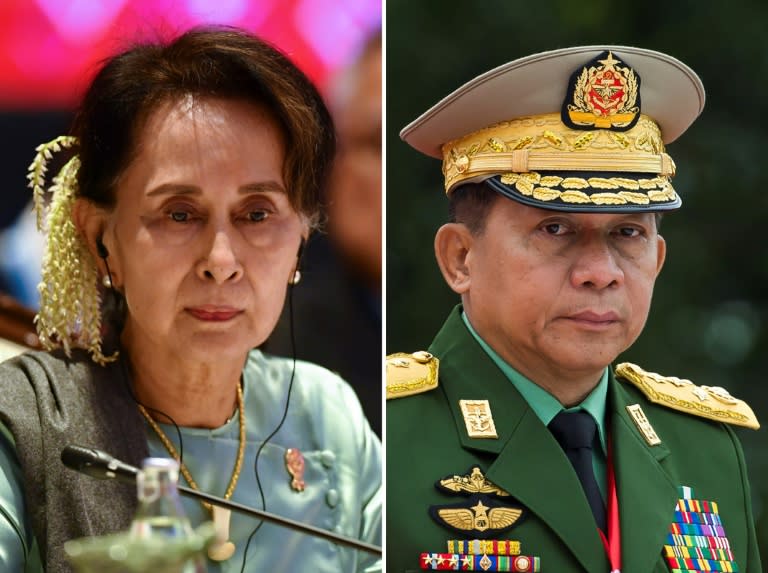
State Counsellor of Myanmar Aung San Suu Kyi attends a summit in Bangkok, Thailand, on November 4, 2019. PHOTO: REUTERS/CHALINEE THIRASUPA

Late last week, Burma announced that its de facto head, Aung San Suu Kyi, will appear before the International Court of Justice (ICJ) to defend the country against allegations of genocide. Earlier in the month, in an application filed before the UN's highest court, the Gambia brought charges of mass murder, rape and destruction of communities in the Arakan state, including against the Rohingya people.     

The Gambian submission noted that the Burmese state security forces "systematically shot, killed, forcibly disappeared, raped, gang-raped, sexually assaulted, detained, beat and tortured Rohingya civilians and burned down and destroyed Rohingya homes, mosques, madrasas, shops and Qur'ans." The suit asked the court to order Burma to immediately cease and desist from all acts of genocide, to punish those responsible, including senior government functionaries and military officers, and to give reparations to the victims.

The Gambian move comes at a time when influential members of the international community continue to ignore the gravity of the crimes committed and remain busy with their own geopolitical, economic and strategic interests and thus refrain from taking any effective measure to reverse what the Rohingya genocide scholar Maung Zarni terms as Burma's "genocidal project". So far, says Zarni, they had done little "beyond issuing non-binding resolutions and statements of condemnation calling for symbolic accountability measures and ritual repetition of carefully crafted spin of repatriation littered with substance-less adjectives such as 'voluntary, safe, dignified and sustainable.'"

The Rohingya genocide has also brought to the fore the hollowness of the UN Security Council in ensuring global peace and security. The failure of the UN system was palpably demonstrated in the business-as-usual approach adopted by its specialised agencies that seemingly stems from their collective denial of the atrocity crimes committed by the Burmese state against various ethnic groups, including the crime of genocide against the Rohingya.

After having been shunned by the world (in which racism, national chauvinism, corporatism, national security paranoia and Islamophobia reign supreme), the victims of Rohingya genocide are now beginning to feel that the wheels of justice have finally begun to roll, albeit very slowly. In November, along with the Gambian move, two other initiatives appear to have cracked the spell of torpor that had an ominous hold over the international community in the quest for justice for the victims of the Rohingya genocide.

Weeks earlier, in a separate move in Argentina, Rohingya and Latin American human rights groups lodged a lawsuit charging both the military and civilian leaders of Burma. The petition noted that while the military was engaged in murder, gang rape, arson, torture and so on, "the entire genocidal plan… could not have been deployed without the complementation, the coordination, the support or the acquiescence of the different civilian authorities." It targeted Aung San Suu Kyi for overseeing government policies "tending towards the annihilation of the Rohingya", such as confining them to "ghettoes" with severely limited access to healthcare and education. Among others, charges were brought against the Burmese army chief Min Aung Hlaing as well. The complaint sought criminal sanction of the perpetrators and accomplices under the principle of "universal jurisdiction" that upholds that war crimes and crimes against humanity are so horrendous that those cannot be shielded by the garb of state sovereignty and can be tried anywhere.

On November 14, in yet another development on the legal front, the Pre-Trial Chamber III of the International Criminal Court (ICC) authorised the Prosecutor to launch an investigation into the alleged crimes within the ICC's jurisdiction in Bangladesh, where about a million Rohingya refugees have taken shelter. The authorisation came following a request by the Prosecutor to open an investigation into alleged crimes within the ICC's jurisdiction committed against the Rohingya people. The Chamber also received such requests on behalf of hundreds of thousands of alleged victims. It accepted that there exists a reasonable basis to believe that widespread and/or systematic acts of violence may have been committed that could qualify as the crimes against humanity and/or religion against the Rohingya population. 

Suu Kyi's apologists—particularly those in the West and in the UN system, who thus far have been peddling the case that "she has little operational control over the military"—appear to have been caught off guard by the announcement of her personal involvement in the Gambia case. In all likelihood, the ICC Chamber Judge's decision and the Argentinian lawsuit have been upsetting for them. Without a doubt, Suu Kyi's decision to own up and publicly defend the dastardly acts of the Burmese security forces (which the UN Independent Fact-Finding Mission noted as "genocidal" constituting "crimes against humanity") only corroborate the fact that despite her differences with the military on the scale and pace of reform in Burma, there has been no discernible distinction in their methods in dealing with the Rohingya.

As of now, neither in words nor in deeds has Suu Kyi given any indication of her displeasure, let alone disapproval, with regard to the genocidal acts of the Burmese military. On the contrary, she had no hesitation in branding the victims of genocide as "terrorists" and blaming those championing the Rohingya cause for generating "icebergs of misinformation". Her administration resolutely rejects repeated calls for independent investigations into the allegations of atrocities against the Rohingya and their access to the Arakan region. It persistently denies requests for visits by the UN Special Rapporteur on Human Rights on Burma and the Independent Fact-Finding Mission.

Quite like "the emperor's new clothes", the National League for Democracy's excitement about what it perceives to be the State Counsellor's bold decision "to face the lawsuit by herself" lays bare that the fallen angel had all along been in absolute cahoots with the murderous generals of Burma.


CR Abrar is an academic and rights worker with an interest in refugees, migrants and the stateless.


Rohingya Repatriation: Stop your propaganda

Source thedailystar, 25 Nov

Dhaka asks Naypyidaw; urges conducive environment in Rakhine

A Rohingya refugee repairs the roof of his shelter at the Balukhali refugee camp in Cox's Bazar, Bang-ladesh, March 5, 2019. Reuters File Photo

Dhaka has asked Naypyidaw to stop concocting campaigns against Bangladesh and focus on creating an environment in Rakhine conducive to sustained repatriation and reintegration of the Rohingyas. 

Myanmar continues to spread fabricated information, misrepresented facts, and unsubstantiated claims to unjustifiably shift the onus of the Rohingya crisis on Bangladesh, said Bangladesh foreign ministry in a statement yesterday.

"This testifies to Myanmar's campaign to avoid its obligations to create conducive environment in Rakhine for the sustainable repatriation and reintegration of the Rohingyas," it said.

Some 750,000 Rohingyas fled a brutal military campaign in Myanmar's Rakhine State. Since then, two attempts of repatriation failed as Rohingyas in Cox's Bazar camps refused to return, saying that Myanmar has not ensured safety in Rakhine and there was no guarantee of citizenship. 

However, Myanmar always tried to pass the blame on Bangladesh, the ministry said.

On November 15, Myanmar's State Counsellor's Office spokesperson claimed that non-cooperation and non-respect of bilateral arrangements by Bangladesh was responsible for non-commencement of Rohingya repatriation.

Myanmar's claim of return of a handful of people, who are not verified, does not testify to any improvement of the ground reality in Rakhine, the ministry said.  

While Myanmar claims that the situation in Rakhine is conducive enough for repatriation, it must allow the international community, including UN officials, international media, and representatives of the prospective returnees, to visit the places of return to assess the ground reality and help the returnees make an informed choice.

Myanmar always alleges that the Rohingyas do not want to return due to intimidation and negative propaganda by ARSA elements and NGO staffers in the camps in Cox's Bazar. Such allegations are totally baseless and must have originated out of some ulterior motives, the ministry said.

There are no ARSA activities in the Rohingya camps, it said, adding, "Myanmar is carrying out such propaganda to avoid its responsibility and misguide the international community."

Myanmar has so far verified only 65 out of about 450 Hindus sheltered in Bangladesh. Before alleging that Bangladesh did not send Hindus back to Rakhine, Myanmar should have completed verification of past residency of all these people. 

"If Myanmar was really sincere about the repatriation, it must have by now arranged return of about 4,200 Rohingyas from the "no man's land" at Bangladesh-Myanmar border and resettled around 140,000 individuals from IDP [internally displaced person] camps in Rakhine to their respective places of origin," the ministry said.

It is an established fact that the Rohingya crisis resulted from systematic disenfranchisement and brutal persecution of this religious minority by the successive regimes in Myanmar, it said.  

"Continuation of the same by the present government is the sole reason for the gravity of the crisis," the statement added. 

"Bangladesh has no interest in delaying the repatriation. Sincerity of Bangladesh in facilitating earliest repatriation of Rohingyas as per bilateral instruments has been unquestionably established through its actions."

Myanmar must not expect Bangladesh to cooperate in repatriation in an uncertain environment in Rakhine, Dhaka said, adding that despite disappointing experiences in the past and greater challenges ahead, Bangladesh primarily relied on bilateral engagements with Myanmar and concluded two instruments on return.

As per the deals, Myanmar is under obligation to bring back normalcy in Rakhine and create an environment conducive to the repatriation and addressing the root causes of the Rohingya crisis. Moreover, Myanmar is entirely responsible for encouraging the Rohingyas in their voluntary return. 

"Unfortunately, Myanmar has utterly failed to demonstrate any political will to fulfil its obligations and is trying to shift the onus on Bangladesh," the statement said. 

If Myanmar is really sincere about ensuring justice and ending the culture of impunity, it should extend full cooperation for ongoing international accountability initiatives.

The Bangladesh government has consistently been pursuing the policy of good neighbourhood to resolve the protracted crisis through dialogues, the statement added.

Therefore, unjustifiable accusations by Myanmar, which is solely held responsible for the crisis, are totally unacceptable, it added.   

First step towards justice for the Rohingya

15 Nov, link here


0:27 / 4:26

First step towards justice for the Rohingya


Saturday, 16 November 2019

ICC approves probe into alleged Myanmar Rohingya abuse

Source Yahoo, 15 Nov

The International Criminal Court on Thursday approved a full investigation into Myanmar's alleged crimes against the Rohingya, as the southeast Asian nation faced mounting legal pressure worldwide over their fate.

Judges backed a prosecution request to probe allegations of crimes against humanity and persecution over Myanmar's 2017 bloody military crackdown against the minority Muslim group.

The ICC decision comes after a week in which former democracy icon Aung San Suu Kyi was named in an Argentine lawsuit over crimes against the Rohingya, and Myanmar faced a separate genocide lawsuit at the UN's top court.

More than 740,000 Rohingya people were forced to flee over the border into sprawling camps in Bangladesh, in violence that United Nations investigators say amounts to genocide.

The Hague-based ICC, set up in 2002 to try the world's worst crimes, said it had "authorised the prosecutor to proceed with an investigation for the alleged crimes within the ICC's jurisdiction" relating to Myanmar.

These include allegations of "systematic acts of violence", deportation as a crime against humanity, and persecution on the grounds of ethnicity or religion against the Rohingya, it said.

Myanmar has long denied accusations it committed ethnic cleansing or genocide.

Myanmar is not signed up to the ICC but the court ruled last year that it has jurisdiction over crimes against the Rohingya minority because Bangladesh, where they are now refugees, is a member.

Chief ICC prosecutor Fatou Bensouda was allowed to open a preliminary investigation on Myanmar in September 2018, and formally applied to begin a full-scale formal probe in July this year.

Bensouda on Thursday welcomed the decision, calling it "a significant development, sending a positive signal to the victims of atrocity crimes in Myanmar and elsewhere."

"My investigation will seek to uncover the truth. My office will now focus on ensuring the success of its independent and impartial investigation," she said in a statement.

- International justice -


1 / 2

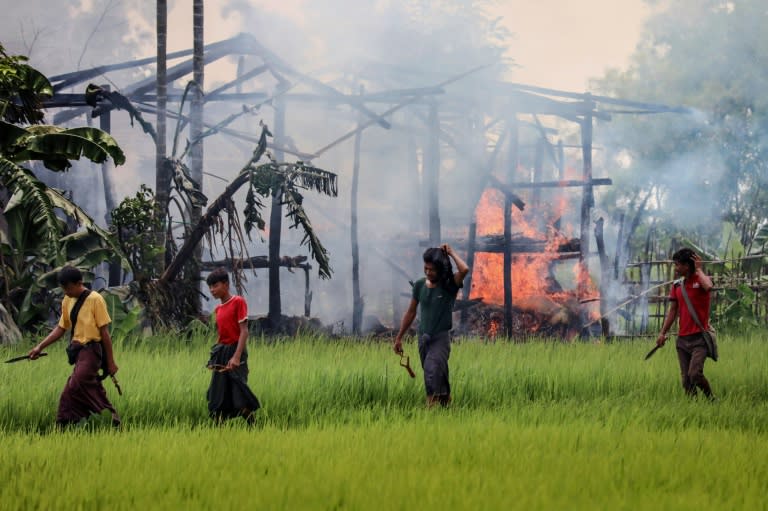
Myanmar launched a military crackdown in 2017 that forced 740,000 Rohingya to flee over the border into sprawling camps in Bangladesh

Myanmar launched a military crackdown in 2017 that forced 740,000 Rohingya to flee over the border into sprawling camps in Bangladesh (AFP Photo/STR)