
Office venue: 815 Romfoad Rd, London E12 6AE, United Kingdom. TEL: +(44) 2030 9278 75, Mobile: +(44) 7780 359718 Email: arnauk.org@gmail.com
Tuesday, 5 December 2017


Monday, 4 December 2017
The Rohingya Tragedy Shows Human Solidarity Is A Lie
 Pic: Al Jazeera (The Rohingya tragedy has shown how a UN member State can have an internal policy built on racial and religious discrimination, writes Karman)
Nobody argues any more about what is happening in Myanmar. The United Nations, international human rights organisations and world capitals all agree that the war being waged on the Rohingya Muslims is a clear example of ethnic cleansing and genocide.
According to international reports, the number of people who have fled Myanmar military operations in Rakhine state have reached approximately 600,000 refugees by October.
The crisis continues to get worse, fanned on one hand, by the Myanmar government's intolerance and insistence on continuing their racist exclusionary policies, and on the other hand, by the fact that the world's interest in what is happening in Myanmar is just not deep enough.
Human solidarity
The most dangerous thing the Rohingya tragedy has uncovered is that the idea of "human solidarity" may be nothing more than a big lie.
Those who call and fight for freedoms and human rights regardless of race or religion or colour or ideology - and I am one of those - are facing a huge conundrum. Why is this happening? Why is this human holocaust, happening right before our eyes, not being stopped? Are there unknown conditions that must be met in order to show human solidarity and offer the support needed to end a particular people's suffering?
These are questions whose answers, I fear, will be terrifying. Is human solidarity something afforded only to the strong and rich who have political or economic power in the international arena?
Many are starting to understand that human solidarity does not extend to Muslims. Regardless of how accurate that opinion is, it is an indicator of the doubts that have taken root in the minds of some, and that is not a good thing.
And this is not the only loss that has come out of the Rohingya tragedy. The regime in Myanmar, which is perpetrating horrific violations every day, can still find allies who defend what it is doing. The Myanmar regime's responsibility for the extermination of the Rohingya is clear and its statements denying what is happening are mendacious.
Sacrificing her past as a fighter for rights and freedom in order to embrace tyranny, Aung San Suu Kyi - leader of the Myanmar government and Nobel Peace Prize laureate - serves as a prime example of the damage that can befall someone we thought would keep her principles no matter what.
It is truly tragic that Aung San Suu Kyi is defying reality and denying with confidence the violence and ethnic cleansing, to an extent that Amnesty International has classified her affirmations as "a mix of untruths and victim blaming". Aung San Suu Kyi could have fought and won a victory for human rights or for her own conscience at the very least. But she preferred to fight for her "nation" and its military vision built on exclusion, marginalisation and rejection of diversity. What a tragic end for a woman who so many counted on.
The 'terrorism' excuse
The Rohingya tragedy has confirmed what we've said about the use of "terrorism" by dictatorships as a useful excuse to realise political goals and destroy opposition or political opponents.
The world has seen how entire villages are destroyed and their inhabitants killed or displaced, all atrocities committed in the name of the "war on terror"; who can accept these justifications? I would think no one.
The truth is that using "terrorism" as an excuse to suppress opponents and to enable tyrannical political leadership to strengthen its bases is an old ruse that everyone can see through. The UN and international community have to be brave and prevent the use of "terrorism" in this way.
Authoritarian regimes must be deprived of the opportunity to use a just cause such as fighting "terrorism" for their own ends. Not only that, but there must also be a real accounting of those who have perpetrated human rights violations for any reason.
Fighting racism
There are numerous calls to end the military operations against the Rohingya today. This can be seen as a positive development, and although it comes very late - better late than never.
In spite of that fact, the regime in Myanmar likely will not respond to these calls unless there is a unified international stance against the crimes against humanity that are being perpetrated there. The military in Myanmar are still the ones who call the shots, and they don't see anything wrong with denying the Rohingya their rights.
The Rohingya tragedy has shown how a UN member state can have an internal policy built on racial and religious discrimination without any international consequences. Therefore pressure must be increased on the regime in Myanmar if we are to see real course correction.
It is time to take a firm stance on Myanmar. We should not pacify a state promoting apartheid policies. It is time to stop a human tragedy that has persisted for decades.
A few days ago, Bangladesh and Myanmar reached an agreement that allows the repatriation of Rohingya refugees, who were subjected to a campaign of persecution and forcible displacement by the Myanmar army only two months ago. But this agreement, even if implemented, is not enough to go on as if nothing happened.
It is true that the repatriation of the Muslim-majority Rohingya is very important to put an end to this tragedy, but what guarantees will the Myanmar government provide for not repeating its ethnic cleansing campaign?
Nevertheless, this agreement should be a prelude to the end of abhorrent discrimination against the Rohingya who should be given political and civil rights as citizens of Myanmar.
The Rohingya have lived for a long time without knowing the true meaning of humanity and justice. Would it not be wonderful if they could find some of that now? We must work to realise that with all our strength, not just for them, but for all of us.
The views expressed in this article are the author's own and do not necessarily reflect Al Jazeera's editorial policy.
- Al Jazeera
Saturday, 2 December 2017
Joint Statement on Repatriation of Rohingya Refugees
by admin, 29 Nov
We, ARNA, the representative body of Rohingya community both from home and exile and undersigned the following Rohingya organizations, would like to raise serious concern about repatriation of Rohingya refugees signed between Myanmar and Bangladesh.
It is noted that the military powered Myanmar government now led by NLD Suu Kyi has been actively lying the situation on the ground, publishing reconstructed fake stories and deceiving with prearranged meetings, allowing incitement of anti-Rohingya sentiments, consistently defending military's brutalities and fingering the minor defense of Rohingya resistant group ARSA. Now instantly signing the deal with Bangladesh without proper arrangement of repatriation and guarantee the rights and recognition of Rohingya refugees. It is nothing more than just an eye-washed to topple international pressures from the account of ongoing genocide and ethnic cleansing.
It is well known that the 'security, safety, existence and welfare' of the Rohingya people been fallen into the state that has been sponsoring genocide, ethnic cleansing, crimes against humanity and war crimes and oppression, repressions, restrictions, confinements, persecutions, arbitrary arrests, corporal and collective punishments, permanently forbidden from livelihood and every social, religious, welfare, education sectors particularly from 25 Aug 2017 and Oct 2016, June 2012, 1994-95, 1991, 1978.
We must take into account of the government authorities' very clear involvement during the attacks that deploying of securities forces and joining the attacks on the ground, introducing (laws and orders, curfew) for Rohingya only to squeeze the Rohingya villagers and openly allowing the aggressive armed Rakhine people trespassing and attacking of innocent unarmed Rohingya villagers, dispatching the gang members everywhere across Arakan, supplying one factory made arms such as arrows and knives, looting (goods, cash, crops and animals) and razing houses, allowing security forces to shot the Rohingyas, bulldozing the buildings those were not destroyed by following day and seizing lands of Rohingyas which were burnt down, disposing the displaced Rohingya victims into concentration camps, blocking of aid and foods supplies and forcing to accept foreigner identity in the mid of humanitarian crisis.
The ousted Thein Sein government itself invited the UNHCR chief to relocate all Rohingyans to a third country in Aug 2012. Additionally, by member of parliament and chairman of Rakhine National Development Party, Dr. Aye Maung (a Bangladeshi by birth) interviewed with Venus News Journal on 14 June 2012 said "the Rakhine state should be established in the same way Israel was initially established".
It is therefore the resistance of ARSA like other armed ethnic groups should not be brought up as an excuse to forgive or weaken to overlay actions against tyrant, brutal, heinous crimes of central rulers and their forces.
The remaining vulnerable Rohingyas those in concentration camps and those confined in their own villages are systematically trapped, facing starvation and forcing to accept foreigner identities in exchange for ration supplies. As a result, many children and elders are dying day by day plus such situation compels them to leave from where they are now trapped, and execution of many of those escapees by Rakhine people.
Similar pogroms were done in 1992 with the Temporary Registration Card known as (White Card) were issued largely in Northern Rakhine (NRS) onto repatriated Rohingya refugees with promises of a pathway to recognition and citizenship and slowly achieved issuing to the overall population in NRS. With such IDs required huge payment for attaining traveling permit and additional payment at least eight gates for one way to other town and reporting at 12 quarters upon arrival in another town, arbitrary punishment and fine also applied in case of failure to report on time.
Later, such IDs came to introduced in the Southern Arakan (SRS) and thereupon many acting Rohingya leaders from both Southern and Northern regions were detained for resisting it. It was not successful in SRS until 2002 and therefore changing the card's colour, some written words and forced to have each household to bear at least one that written Bengali race, or mix or non-description of race.
Now one more with new name, the so call- National verification cards (NVC), forcefully issuing to indigenous Rohingya people. By Laws, the NVC card issuing is for verification of the undocumented non-citizens so it is nothing to do with Rohingya people who have been issued nationality identities, recognized as an ethnic group and having records of inhabitant. It is another factor to deprive and illegitimate the rights of native Rohingya like the past that will definitely devaluate the dignity and existence of Rohingya.
Many Rohingyans refugees today reloaded in Bangladesh are repatriated former refugees of 1978 and 1991. The Bangladeshi government therefore need to take constructive steps to ensure the grantee of relocation, rehabilitation, rights, recognition and dignity of Rohingya meet standard as it is related to the existence of nearly a million of recent and the past arrival Rohingya refugees.
We concern for the agreement has nothing mentioned of Rohingya identity and recognition, nothing mention about laws and orders to bring into account for the military forces and their brutal crimes. It is therefore before agreeing of repatriation, it must review about how in the past similar military powered government had exploited the repatriation agreement consisted relocation, lifting restrictions, equal rights and rehabilitation.
As part of the development to see whether the government and authorities are fulfilling the promises,
the Bangladeshi government as a nation bearing of the biggest Rohingya refugees ever must ensure the Myanmar government to undertake its said promises to be delivered to Rohingyans and Kamans those are in the country. These must include:-
i) Relocation of about 150,000 of displaced Rohingyan and Kaman people (who are trapped in 42 concentration camps) to their respective displaced origin villages and facilitate with full rehabilitation programs.
ii) Official recognition of Rohingya ethnicity, existence and issuing of similar National Identity card with Rohingyan ethnicity written and any written descriptions on the card should be similar to IDs issued to Burman Buddhist people.
iii) Lifting all forms of restrictions, barriers, segregations, and guarantee safety, security and livelihood of entire Rohingya and Kaman people.
iv) Installation of Ms. Suu Kyi said rules or laws and bringing all perpetrator Rakhine people and government authorities into account for their crimes and end to the rhetoric of calling Bengali, terrorist, illegal immigrant and anti-muslim activities.
v) Ensure aid and food supplies directly to the victims, free access of independent foreign journalists, diplomats, UN envoys and UN Inquiry Commission.
We also would like to urge the Bangladeshi government, UNSC and its member countries, countries those signed the convention to prevent genocide, countries those have business ties with Burma, other countries those have heavily bearing the Rohingya refugees and resettlement countries those resettling Rohingya refugees, and funding countries, must jointly take effective action onto Burmese government to end the humanitarian crisis, to halt all forms of brutalities and crimes, to reload the rights of Rohingya, to persuade to uphold rules of laws to equally guarantee safety, security, dignity and rights of the entire population.
Endorsed by:
Arakan Rohingya National Assembly (UK)
Asean Rohingya Centre (KL, Malaysia)
Arakan Rohingya Organization UK (Uk)
Burma Rohingya Action Organization (UK)
Australian Burmese Rohingya Organization (Melbourne Vic, Australia)
Australian Burmese Rohingya Association (Liverpool NSW, Australia)
Queensland Rohingya Community (QLD, Australia)
Burmese Rohinya Community in Thailand (Thailand)
Rohingya Arakanese Refugee Committee, (Malaysia)
Ethnic Rohingya Community of Arakan, (Malaysia)
Myanmar Ethnic Rohingya Human Rights Organization Malaysia (Malaysia)
Rohingya American society (WI, USA)
For more information, Please contact:
M.ILYAS -UK (chairman): h/p: +(44) 7780 359718
V-chairman: MD.Yunus (GE): +(966) 53 274 0805
Habiburahman (G.S), (Aus), +(61) 406 310077
Joint-secretary: Hf.Hashim Mamood (BD): +(88) 01 729 872581
Friday, 24 November 2017
There is a Genocide Going on Right Now in Myanmar and We’re Ignoring It

We said never again. But it's happening right now, and we are doing nothing to stop it.
Here's what is going on with Rohingya in Myanmar and why we should be doing much more.
'Never Again'
Image Credit: Public Domain / Wikimedia
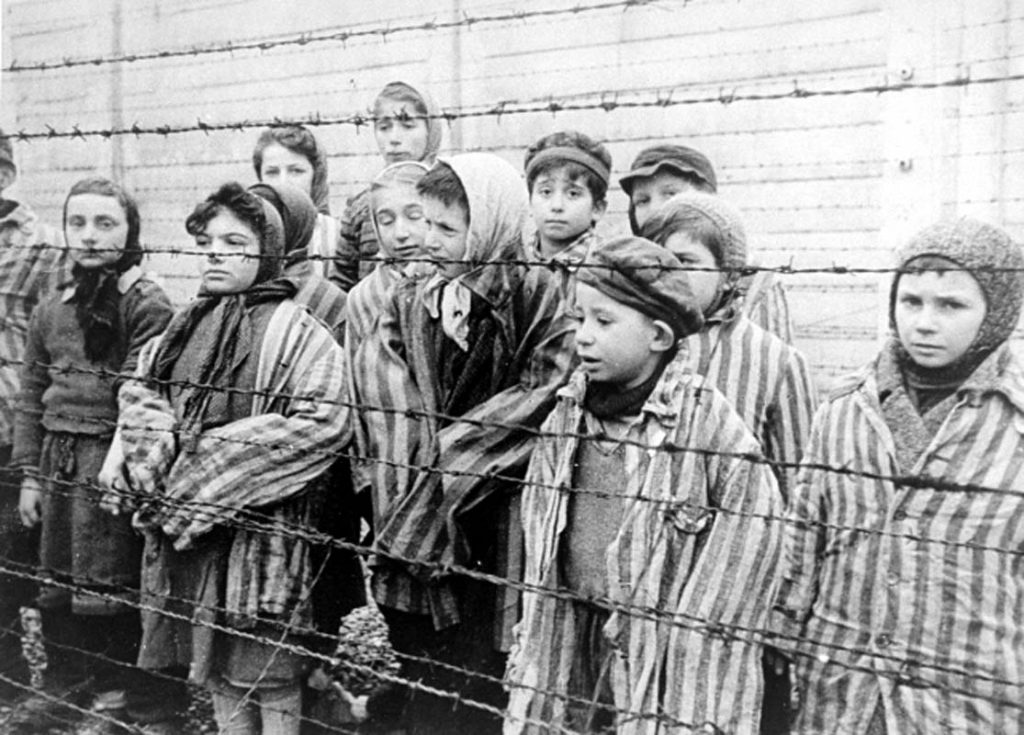
This is what world leaders solemnly promised in the aftermath of World War II, and that promise was the start of the international human rights system. After the horrors of the Holocaust, the world united to agree on minimum standards of dignity – that is, human rights – for all human beings.
Human rights were given weight by the Universal Declaration of Human Rights and later made enforceable in Europe under the Human Rights Convention. But what is happening in Myanmar shows that the world's promise of "never again" does not always apply. We really need to talk about what's going on, but more crucially, we need to take action and do something about it.
How Did We Get Here? The Story of the Rohingya in Myanmar
Image Credit: EU Echo / Flickr
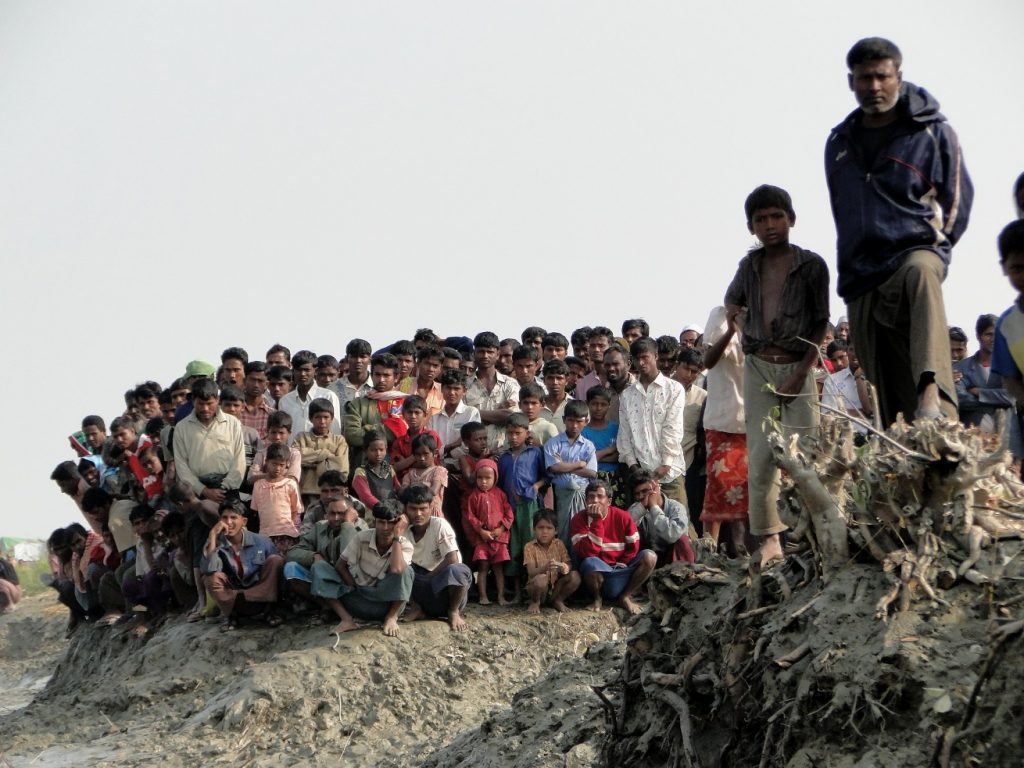
The Rohingya crisis didn't happen overnight. As always, there were many warning signs. Institutionalised discrimination has been going on for decades, stemming from long-simmering ethnic and religious frictions which were rooted in colonial rule. This has also been exacerbated by the military's xenophobic nation-building agenda.
Rohingya Muslims have existed in the country for centuries. Myanmar, previously known as Burma, has always been mostly Buddhist, but under British colonial rule in the 1820s migrant labour was encouraged to expand rice cultivation. Many Muslim workers from neighbouring Bengal came to the country and the Rohingya community (which has been present since the 12th century) expanded rapidly – tripling between the 1870s and 1910s.
Broken Promises and Rebellions
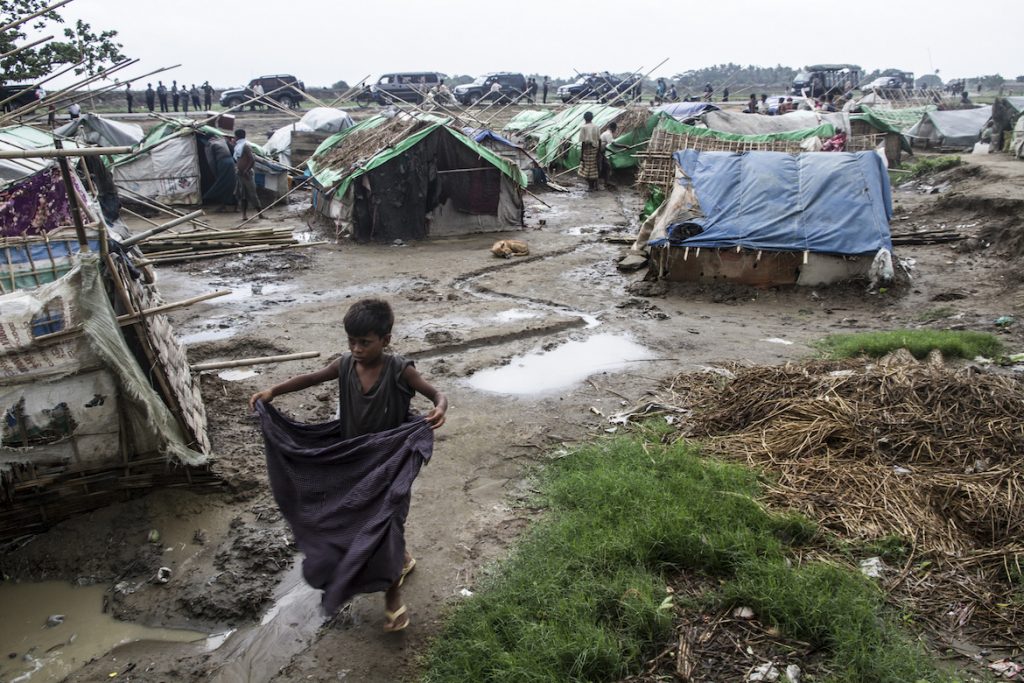
A refugee camp in Bangladesh. Image Credit: Steve Gumaer / Flickr
British rulers promised the Rohingya separate land in exchange for support, hence why they sided with them during WWII. After the war though, when Myanmar gained independence from British rule, the Rohingya were denied the promised autonomous state and, at the same time, they were excluded from Myanmar's population. In 1950, a Rohingya rebellion broke out and was eventually crushed by the army, who called and treated them as terrorists.
After the 1926 military coup, the situation further deteriorated in the 60 years of military rule. In 1978, a heavy-handed government campaign for citizens' registration pushed more than 200,000 Rohingyas to flee to Bangladesh. In 1982, a new citizenship law branded Rohingyas as illegal immigrants, effectively making them stateless and depriving them of their most fundamental rights. At the beginning of the 1990s, 200,000 Rohingyas flew to Bangladesh to escape forced labour, violence and persecution at the hands of the army.
A Transition to Democracy Gone Wrong
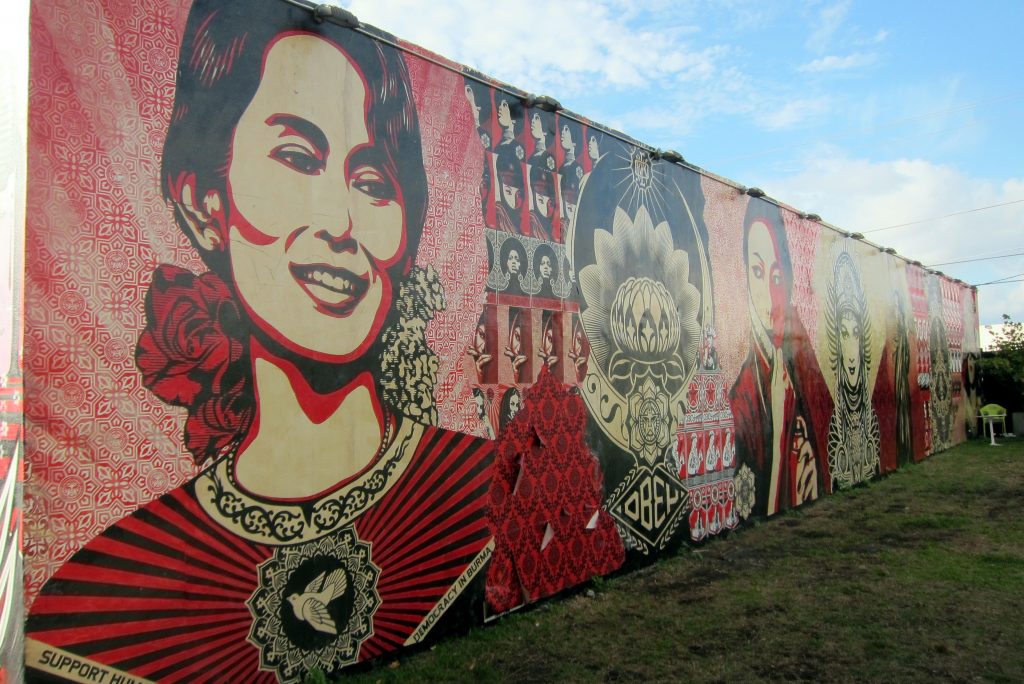
Image Credit: Wally Gobetz / Flickr
A democratic transition has been ongoing since December 2010, when opposition leader and Nobel peace prize winner Aung San Suu Kyi was released from house arrest. But things for the Rohingya did not improve, at all. Some even said the democratic transition actually inflamed things. Rohingyas were not included in the census nor allowed to participate in the first democratic elections.
A text book example of ethnic cleansing
Zeid Ra'ad al-Hussein, UN
Violence has been greatly escalating in the past two years. Violent attacks in October 2016 and August 2017 by the Arakan Rohingya Salvation Army sparked an intense crackdown by the Myanmar military. Massive "clearance operations" have been going on ever since, with Rohingya villages being burned to the ground and survivors telling brutal stories of murder, rape and torture.
Since August 2017 alone more than 600,000 Rohingya have fled. Embarking on a long and dangerous journey to neighbouring Bangladesh, they have joined hundreds of thousands who fled in earlier waves of ethnic violence.
The Rohingya refugee population in Bangladesh is now topping more than 1 million. However, to make matters worse, the country has repeatedly pushed back refugees and is now even talking about offering sterilisation in refugees camps.
Why Aren't we Calling it Genocide?
Image Credit: United to End Genocide / Flickr
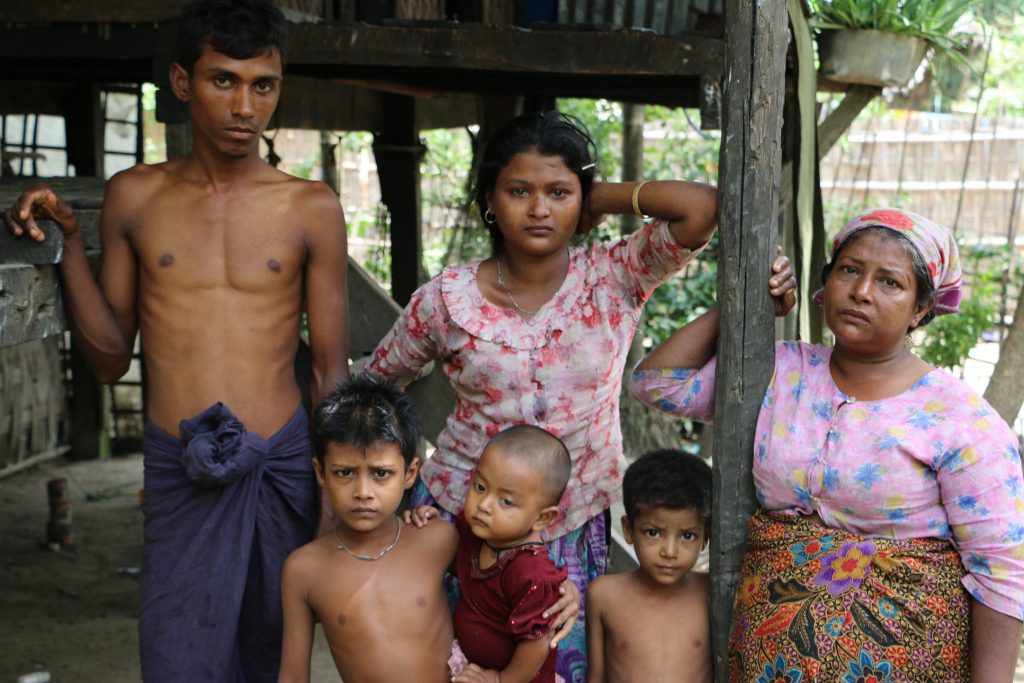
The Rohingyas have been commonly dubbed "the world's most persecuted minority"for a while. According to the United Nations human rights' chief, what's going on in Myanmar is "a text book example of ethnic cleansing".
The situation in Bosnia and in Rwanda (that is, years of concerted dehumanisation campaigns building up to mass murders) – arguably meets the criteria for being described as a genocide under international law. Many have drawn parallels to Myanmar.
Calls from academics to label the atrocities against Rohingyas as genocide are on the rise. In fact, the Yale Law School's human rights clinic released a report suggesting the persecution of the Rohingya fit the legal definition of genocide before the last two cycles of violence in Myanmar.
A genocide is taking place, but there is taking place, but there is little chance the international community will effectively mobilise to stop it
David Simon. Yale University
That notwithstanding, though, world leaders appear very reluctant to use the word "genocide". The hang-up is a clause in the UN Genocide Convention that requires them to "prevent and punish" it, something the international community is neither willing nor able to do.
David Simon, Director of the Genocide Studies Program at Yale University, added: "A genocide is taking place, but there is little chance that the international community will mobilize effectively to stop it. Questions of national sovereignty and self-interest have almost always trumped international concerns about human rights."
A Human Rights Symbol Ignores a Genocide?
Image Credit: UN Geneva / Flickr
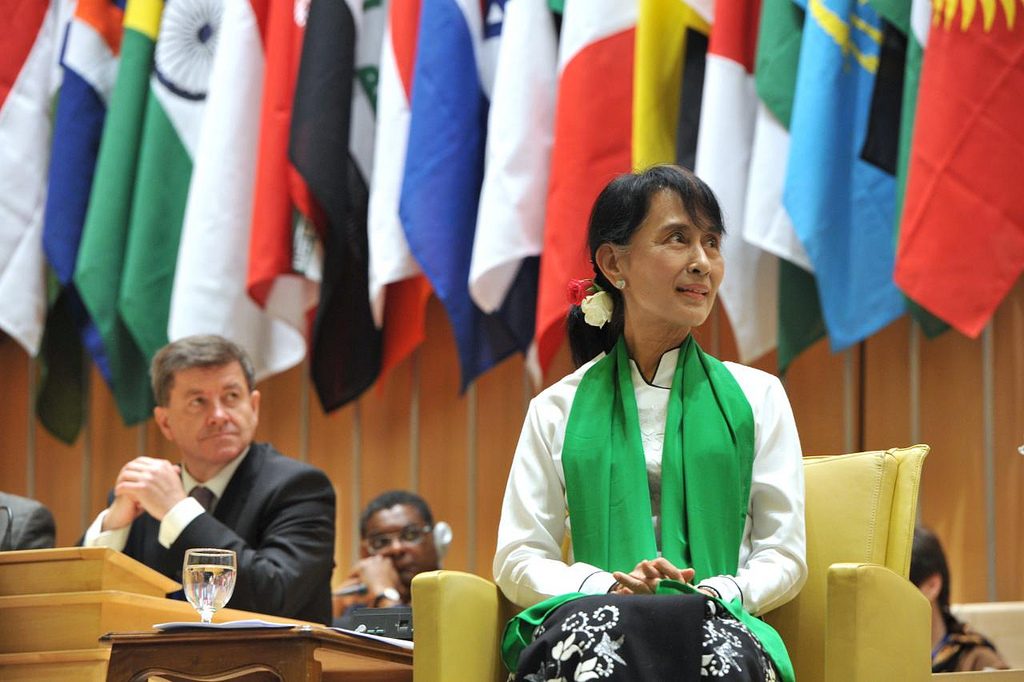
The inertia of international community also somewhat depends on its leader Aung San Suu Kyi being one of the most celebrated human rights icons of our age.
The Nobel peace laureate has completely failed to call out on the atrocities being committed against the Rohingyas, in what has been called "the clearest act of complicity". Suu Kyi's transformation into "genocide apologist" has prompted requests to take away her Nobel prize as well as other honours bestowed to her on grounds of her human rights activists.
The inability of the international community to take any action despite being faced with the most atrocious human rights violations shows a dismaying measure of the state of art of human rights. And this should motivate all of us to keep pushing – harder and stronger – to see the Rohingya genocide acknowledged and accounted for. We said "never again." Now it is time to show we really meant it.
ABOUT THE AUTHOR